
Unexpected expenses can happen at any time. A sudden medical emergency, an unexpected car repair, a damaged appliance, or temporary unemployment can quickly affect your finances. While it’s impossible to predict every situation, preparing for them is possible. That is where an emergency fund becomes valuable.
An emergency fund is money set aside specifically for unexpected expenses. It acts as a financial safety net that helps you manage emergencies without relying on loans or credit cards. Building this fund may seem difficult at first, especially if you’re starting with limited savings, but even small contributions can grow into meaningful financial protection over time.
This guide explains how to build an emergency fund step by step with practical advice that works for beginners and experienced savers alike.
What Is an Emergency Fund?
An emergency fund is a dedicated savings account reserved only for genuine financial emergencies. Unlike savings for vacations, gadgets, or planned purchases, this money is intended for situations that are unexpected, necessary, and urgent.
Examples include:
- Medical expenses not covered by insurance
- Temporary job loss
- Emergency home repairs
- Essential vehicle repairs
- Urgent family travel
- Unexpected legal or financial obligations
Having this reserve provides peace of mind because you know that sudden expenses will not immediately disrupt your financial plans.
Why Building an Emergency Fund Matters
Financial emergencies often arrive without warning. According to many financial planning experts, households with emergency savings are generally better prepared to recover from unexpected financial setbacks.
An emergency fund can help you:
- Reduce dependence on high-interest debt
- Avoid withdrawing long-term investments
- Maintain financial stability during income interruptions
- Reduce stress associated with unexpected expenses
- Improve confidence in financial decision-making
Instead of worrying about how to pay an urgent bill, your emergency savings provide immediate support while allowing you to focus on solving the underlying problem.
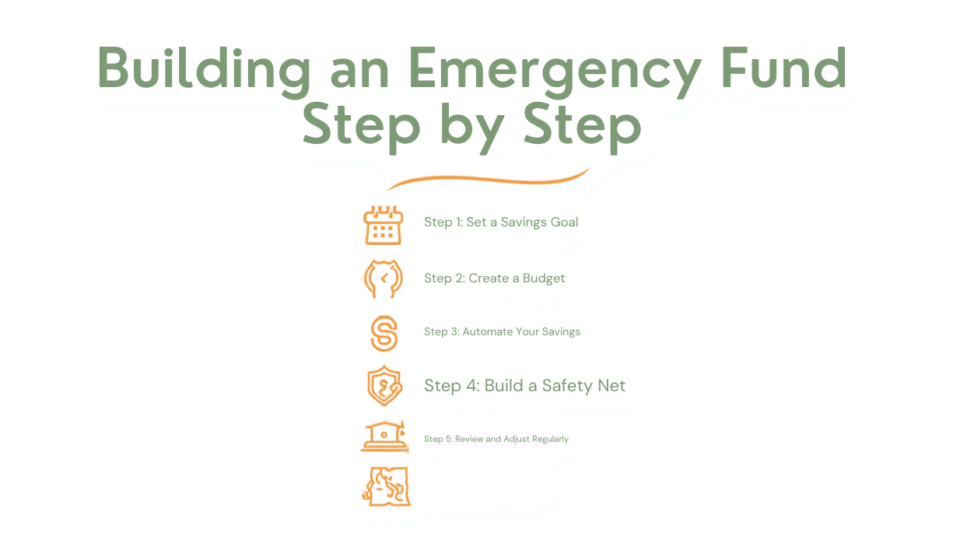
Step 1 Understand Your Monthly Essential Expenses
Before deciding how much to save, calculate your monthly essential living expenses.
Include necessary costs such as:
- Housing
- Utilities
- Groceries
- Transportation
- Insurance
- Loan repayments
- Healthcare expenses
- Childcare if applicable
Avoid including optional spending like entertainment, luxury shopping, or vacations.
Knowing your essential monthly expenses helps determine your emergency fund target more accurately.
Example
Suppose your monthly essentials total ₹40,000.
A three-month emergency fund would be:
₹40,000 × 3 = ₹1,20,000
A six-month emergency fund would be:
₹40,000 × 6 = ₹2,40,000
This calculation provides a realistic savings goal rather than an arbitrary number.
Step 2 Set a Realistic Savings Goal
Many people become discouraged because they believe they must save several months of expenses immediately.
Instead, focus on smaller milestones.
For example:
- First goal: ₹5,000
- Second goal: ₹20,000
- Third goal: One month of expenses
- Fourth goal: Three months
- Final goal: Six months or more
Reaching smaller targets creates motivation and builds saving habits over time.
Remember that consistency matters more than the initial amount.
Step 3 Create a Monthly Budget
A budget shows where your money goes and helps identify opportunities to save.
Start by listing:
Income
Include salary, freelance income, bonuses, rental income, or other reliable earnings.
Fixed Expenses
These remain relatively stable each month, including rent, utilities, internet, insurance, and loan payments.
Variable Expenses
These change monthly and include groceries, transportation, dining out, entertainment, and shopping.
Compare your income with expenses to identify how much can be directed toward emergency savings.
Even saving five to ten percent of your monthly income can make a significant difference over time.
Step 4 Open a Separate Savings Account
Keeping emergency savings separate from your everyday spending account reduces the temptation to use the money unnecessarily.
Choose an account that offers:
- Easy access during emergencies
- Safety for your deposits
- Competitive interest rates
- Minimal fees
- Online banking convenience
A dedicated account also makes it easier to monitor your progress.
Step 5 Automate Your Savings
Automation removes the need to remember monthly transfers.
Arrange for an automatic transfer shortly after receiving your salary.
For example:
- Salary received on the first of the month
- Automatic transfer to emergency savings on the second
This approach follows the principle of paying yourself first before spending on discretionary purchases.
Over time, automatic contributions become part of your financial routine.
Step 6 Start Small if Necessary
One common misconception is that meaningful savings require large monthly deposits.
In reality, small consistent contributions create long-term results.
For example:
Saving ₹100 daily equals approximately ₹3,000 each month.
After one year:
₹3,000 × 12 = ₹36,000
Increasing the daily amount gradually accelerates your progress without creating financial pressure.
The important step is simply getting started.
Step 7 Reduce Unnecessary Expenses
Review your spending habits carefully.
Small adjustments can free additional money for savings without dramatically changing your lifestyle.
Examples include:
- Preparing meals at home more often
- Limiting impulse purchases
- Reviewing subscription services
- Using shopping lists
- Comparing prices before major purchases
- Reducing food waste
Redirect the money saved toward your emergency fund rather than increasing discretionary spending.
Step 8 Use Windfalls Wisely
Unexpected income provides an excellent opportunity to strengthen emergency savings.
Examples include:
- Annual bonuses
- Tax refunds
- Cash gifts
- Incentives
- Freelance income
- Overtime earnings
Instead of spending the entire amount immediately, consider allocating a portion to your emergency fund.
Even directing fifty percent of unexpected income can significantly accelerate your savings progress.
How Much Should an Emergency Fund Contain?
There is no universal answer because financial situations vary.
However, financial planners commonly recommend:
Three Months of Expenses
Suitable for individuals with stable employment and predictable income.
Six Months of Expenses
Appropriate for families, freelancers, self-employed professionals, or those with variable income.
Nine to Twelve Months
Some individuals prefer larger reserves depending on their profession, health considerations, or economic uncertainty.
The right amount depends on your personal circumstances, responsibilities, and comfort level.
Where Should You Keep an Emergency Fund?
Your emergency savings should balance accessibility with safety.
Suitable options include:
High Interest Savings Accounts
These provide liquidity while earning modest interest.
Money Market Accounts
These may offer slightly higher returns while maintaining accessibility.
Short-Term Fixed Deposits
Some people divide their emergency fund between savings accounts and short-term deposits for improved returns while maintaining reasonable access.
Avoid placing emergency funds in investments that may fluctuate significantly in value, such as stocks or cryptocurrencies, because emergencies require immediate and predictable access to your money.
Common Mistakes to Avoid
Many people unintentionally delay financial security by making avoidable mistakes.
Using Emergency Savings for Non Emergencies
Vacations, shopping, and planned celebrations should not come from emergency savings.
Reserve the fund only for genuine emergencies.
Waiting for the Perfect Time
Many people postpone saving because they believe their income is too low.
Starting with small amounts is often more effective than waiting indefinitely.
Ignoring Inflation
Review your emergency fund periodically.
As living expenses increase, your savings target may also need adjustment.
Keeping Too Much Cash at Home
While having a small amount of cash available can be practical, storing the majority of emergency savings securely within the financial system provides greater protection.
Real Life Example
Imagine Priya, a marketing professional earning a steady monthly salary.
Initially, she believed saving ₹2,00,000 was impossible. Instead of focusing on the final goal, she committed to saving ₹5,000 each month through automatic transfers.
She also reduced online shopping and redirected her annual bonus toward her emergency fund.
After two years, she accumulated enough savings to cover several months of essential expenses.
When unexpected medical costs arose, she paid the expenses using her emergency fund rather than relying on credit cards. As a result, she avoided debt and continued meeting her regular financial commitments without significant disruption.
Her experience illustrates how consistent habits often matter more than large one-time contributions.
Tips for Staying Motivated
Building an emergency fund is a long-term habit rather than a short-term challenge.
Stay motivated by:
- Tracking monthly progress
- Celebrating savings milestones
- Reviewing financial goals regularly
- Remembering the purpose of the fund
- Increasing contributions whenever income grows
Visual progress trackers or budgeting apps can also make saving feel more rewarding.
Frequently Asked Questions
Can I Build an Emergency Fund While Paying Debt?
Yes. Many financial experts recommend balancing both goals. Continue making required debt payments while consistently contributing small amounts to emergency savings whenever possible.
Should I Invest My Emergency Fund?
Generally, emergency savings should remain easily accessible and relatively stable rather than exposed to significant investment risk.
How Long Does It Take to Build an Emergency Fund?
The timeline depends on income, expenses, and savings rate. Some people reach their goal within one year, while others may take several years. Consistency is more important than speed.
Can Freelancers Benefit from Larger Emergency Funds?
Yes. Individuals with variable income often benefit from maintaining larger emergency reserves because monthly earnings may fluctuate significantly.
Building an emergency fund is one of the most effective ways to improve long-term financial stability. Although saving may seem challenging initially, every contribution moves you closer to greater financial resilience. By understanding your essential expenses, creating a practical budget, automating savings, reducing unnecessary spending, and using unexpected income wisely, you can steadily build a financial cushion that protects against life’s uncertainties.
An emergency fund is not about expecting the worst. It is about being prepared for the unexpected while maintaining confidence in your financial future. With patience, consistency, and thoughtful planning, anyone can build an emergency fund that provides security, flexibility, and peace of mind when it matters most.

sahithya
Sahithya is a content writer specializing in digital content and online research. She is passionate about creating accurate, easy-to-understand articles that help readers make informed decisions. Every article is researched using trusted sources and official references, and is reviewed periodically to keep the information accurate and up to date