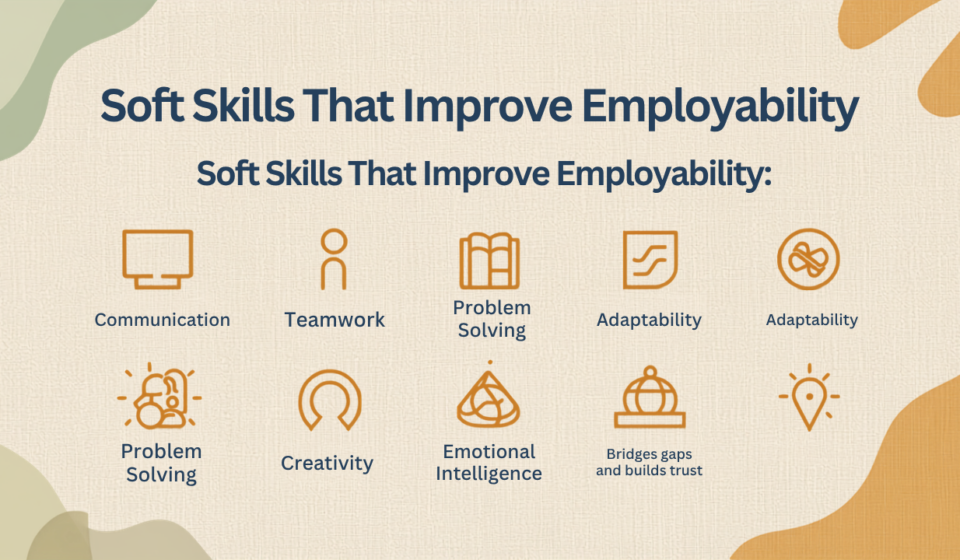

Employers today look beyond qualifications and technical expertise when evaluating job candidates. They want professionals who can communicate effectively, solve problems, work well with others, and adapt to changing environments. These qualities, commonly known as soft skills, often determine how successfully an individual performs in the workplace.
Imagine two candidates applying for the same position. Both possess similar educational backgrounds and technical knowledge. However, one demonstrates confidence during interviews, listens carefully, communicates ideas clearly, and collaborates naturally with others. More often than not, that individual stands out because employers recognize that strong interpersonal abilities contribute to team success and organizational growth.
As industries continue evolving through digital transformation, automation, and global collaboration, soft skills are becoming even more valuable. They help professionals navigate workplace challenges, build meaningful relationships, and remain effective regardless of technological changes. Understanding and developing these skills can significantly improve employability across nearly every profession.
Understanding Soft Skills and Their Importance
Soft skills refer to personal attributes, communication abilities, emotional intelligence, and behavioral traits that influence how people interact with others. Unlike technical skills, which can often be measured through certifications or exams, soft skills are demonstrated through everyday actions and workplace behavior.
Examples include active listening, leadership, teamwork, time management, adaptability, creativity, empathy, and critical thinking.
Research from organizations such as LinkedIn, the World Economic Forum, and numerous workforce studies consistently highlights that employers increasingly prioritize soft skills because they contribute directly to productivity, innovation, and workplace harmony. Employees who communicate effectively and collaborate well often strengthen team performance while reducing misunderstandings and conflicts.
Soft skills also enhance customer satisfaction, improve leadership effectiveness, and support positive organizational culture. As workplaces become more collaborative and diverse, these abilities become essential for long-term career success.
Why Employers Value Soft Skills
Technical knowledge helps employees complete specific tasks, but soft skills influence how efficiently those tasks are accomplished within a team or organization.
Employers appreciate candidates who:
- Communicate ideas clearly
- Work effectively with diverse teams
- Adapt quickly to changing priorities
- Handle workplace challenges calmly
- Take responsibility for their work
- Demonstrate professionalism
- Build positive relationships
- Solve problems independently
These qualities often reduce training time and improve overall organizational performance.
For example, a software developer may write excellent code, but if they struggle to communicate project updates or collaborate with designers and managers, project timelines may suffer. Likewise, a sales professional with excellent communication skills can often build stronger customer relationships than someone relying solely on product knowledge.
Communication Skills Build Professional Confidence
Communication remains one of the most requested employability skills across industries.
Effective communication includes speaking clearly, writing professionally, listening attentively, and understanding non-verbal cues. It allows employees to exchange information accurately while minimizing misunderstandings.
Strong communication skills become particularly important during:
Team Meetings
Employees who express ideas clearly contribute valuable insights and help projects move forward efficiently.
Customer Interactions
Clear communication improves customer satisfaction by ensuring questions are answered accurately and professionally.
Workplace Collaboration
Sharing information openly encourages teamwork and helps departments coordinate effectively.
Improving communication often involves practicing active listening, expanding vocabulary, asking thoughtful questions, and organizing thoughts before speaking.
Teamwork Creates Better Workplace Outcomes
Modern organizations rely heavily on collaboration. Projects frequently involve professionals from multiple departments working toward common goals.
Teamwork requires individuals to:
- Respect different perspectives
- Share responsibilities fairly
- Support colleagues when needed
- Resolve disagreements professionally
- Celebrate shared achievements
A marketing campaign, for instance, may involve designers, writers, analysts, developers, and project managers. Success depends not only on technical expertise but also on each person’s willingness to cooperate and communicate effectively.
Employees who contribute positively to team environments often become trusted colleagues and future leaders.
Adaptability Helps Professionals Thrive
Technology, customer expectations, and business strategies continue evolving rapidly.
Adaptability allows professionals to respond positively to change instead of resisting it.
Examples include:
Learning New Technology
Employees frequently need to master updated software, digital platforms, or workplace tools.
Managing Organizational Changes
Businesses regularly introduce new processes, reporting structures, or responsibilities.
Responding to Industry Trends
Professionals who remain curious and open-minded can adjust more quickly to market demands.
Employers appreciate adaptable employees because they remain productive even during uncertain or changing circumstances.
Problem Solving Demonstrates Initiative
Every workplace encounters challenges.
Rather than waiting for instructions, strong problem solvers analyze situations, identify possible solutions, evaluate alternatives, and make informed decisions.
Effective problem-solving involves:
Identifying the Root Cause
Understanding why a problem exists prevents temporary fixes.
Evaluating Possible Solutions
Considering multiple approaches increases the likelihood of selecting the most effective option.
Taking Action
Implementing solutions while monitoring outcomes demonstrates responsibility and initiative.
For example, a customer service representative who identifies recurring customer complaints may suggest improvements that reduce future issues, benefiting both customers and the organization.
Emotional Intelligence Strengthens Professional Relationships
Emotional intelligence refers to understanding and managing one’s emotions while recognizing and responding appropriately to the emotions of others.
Professionals with strong emotional intelligence typically:
- Stay calm under pressure
- Handle criticism constructively
- Show empathy toward colleagues
- Manage workplace conflict respectfully
- Build trust within teams
These qualities contribute to healthier work environments and stronger professional relationships.
Leaders with high emotional intelligence often inspire greater employee engagement because they communicate with empathy while maintaining accountability.
Time Management Improves Productivity
Meeting deadlines consistently demonstrates professionalism.
Time management helps employees prioritize responsibilities, reduce stress, and maintain work quality even during busy periods.
Practical strategies include:
Prioritizing Important Tasks
Completing high-impact work first prevents unnecessary delays.
Planning Daily Activities
Using calendars, planners, or digital task management tools helps organize responsibilities.
Avoiding Distractions
Minimizing interruptions improves focus and productivity.
Employees who manage time effectively often earn greater trust from supervisors because they consistently deliver reliable results.
Leadership Is Valuable at Every Career Stage
Leadership extends beyond managerial positions.
Employees demonstrate leadership whenever they take initiative, support colleagues, solve problems, or motivate others.
Leadership qualities include:
- Accountability
- Decision-making
- Integrity
- Confidence
- Motivation
- Responsibility
- Positive influence
A new graduate leading a university project or organizing workplace activities already demonstrates leadership potential.
Organizations often promote employees who naturally guide teams and contribute positively to workplace culture.
Critical Thinking Encourages Better Decisions
Critical thinking enables professionals to evaluate information objectively before making decisions.
Rather than accepting assumptions, critical thinkers analyze evidence, compare alternatives, and anticipate possible outcomes.
This skill becomes valuable when:
- Evaluating business strategies
- Solving customer problems
- Managing workplace risks
- Improving operational processes
Professionals who consistently make thoughtful decisions contribute to better organizational performance.
Creativity Supports Innovation
Creativity is no longer limited to artistic professions.
Businesses increasingly value employees who generate fresh ideas, improve existing processes, and identify innovative solutions.
Creative thinking supports:
- Product development
- Marketing campaigns
- Process improvement
- Customer experience
- Business strategy
Even small improvements suggested by employees can significantly increase efficiency and productivity.
Professionalism Builds Employer Trust
Professionalism influences how colleagues, managers, and clients perceive an employee.
Professional behavior includes:
- Maintaining reliability
- Respecting workplace policies
- Demonstrating honesty
- Accepting responsibility
- Treating everyone respectfully
- Communicating courteously
Professional employees often become dependable team members because others trust their judgment and work ethic.
Conflict Resolution Maintains Healthy Workplaces
Disagreements naturally occur whenever people collaborate.
Conflict resolution involves addressing issues respectfully while seeking mutually beneficial solutions.
Effective conflict management includes:
Listening Carefully
Understanding every perspective prevents unnecessary misunderstandings.
Remaining Respectful
Professional conversations remain focused on solutions rather than personal criticism.
Finding Common Ground
Successful resolution often requires compromise and cooperation.
Organizations value employees who contribute to positive workplace relationships rather than escalating conflicts.
Continuous Learning Enhances Employability
Learning does not end after graduation.
Successful professionals continuously improve their knowledge and skills through training, certifications, workshops, reading, mentoring, and practical experience.
Continuous learning demonstrates:
- Curiosity
- Growth mindset
- Adaptability
- Professional commitment
Employers often recognize employees who actively pursue self-improvement because they contribute new ideas and remain prepared for changing industry demands.
Practical Ways to Develop Soft Skills
Improving soft skills requires consistent practice rather than memorization.
Professionals can strengthen these abilities by:
Seeking Constructive Feedback
Managers, mentors, and colleagues can identify strengths and areas needing improvement.
Participating in Team Activities
Group projects encourage collaboration, communication, and leadership development.
Practicing Public Speaking
Presentations improve confidence, organization, and verbal communication.
Reading Regularly
Books on leadership, communication, psychology, and personal development provide valuable insights.
Observing Successful Professionals
Watching experienced leaders interact with teams offers practical learning opportunities.
Reflecting on Daily Experiences
Evaluating workplace interactions helps identify opportunities for continuous improvement.
Common Mistakes That Limit Employability
Many qualified candidates struggle during recruitment because they overlook soft skill development.
Common mistakes include:
- Interrupting others during conversations
- Poor listening habits
- Avoiding teamwork
- Resisting constructive feedback
- Poor time management
- Lack of adaptability
- Negative workplace attitude
- Weak communication during interviews
Recognizing these behaviors allows professionals to improve before they affect career opportunities.
The Future of Employability Depends on Human Skills
Artificial intelligence, automation, and digital transformation continue changing how organizations operate. While technology can automate repetitive tasks, uniquely human abilities remain difficult to replace.
Skills such as empathy, creativity, communication, leadership, negotiation, collaboration, and emotional intelligence will continue becoming more valuable as workplaces become increasingly technology-driven.
Professionals who combine technical expertise with strong interpersonal skills are better positioned to succeed in future job markets. Employers consistently seek individuals who can solve problems creatively, build relationships, lead teams, and adapt to evolving business environments.
Soft skills have become essential for career growth, workplace success, and long-term employability. While technical expertise opens doors to job opportunities, communication, teamwork, adaptability, leadership, emotional intelligence, and problem-solving often determine how far professionals progress in their careers. Developing these skills requires ongoing practice, self-awareness, and a willingness to learn from everyday experiences. By strengthening both technical knowledge and interpersonal abilities, individuals can become more confident professionals, contribute positively to their organizations, and remain competitive in an ever-changing job market. Investing in soft skills is ultimately an investment in lasting career success.

sahithya
Sahithya is a content writer specializing in digital content and online research. She is passionate about creating accurate, easy-to-understand articles that help readers make informed decisions. Every article is researched using trusted sources and official references, and is reviewed periodically to keep the information accurate and up to date