
The Internet of Things (IoT) has changed the way people interact with technology. Instead of operating as standalone devices, everyday objects, industrial equipment, vehicles, medical devices, and home appliances can now communicate with each other through the internet. This constant exchange of information creates smarter systems that improve efficiency, reduce costs, and support better decision-making.
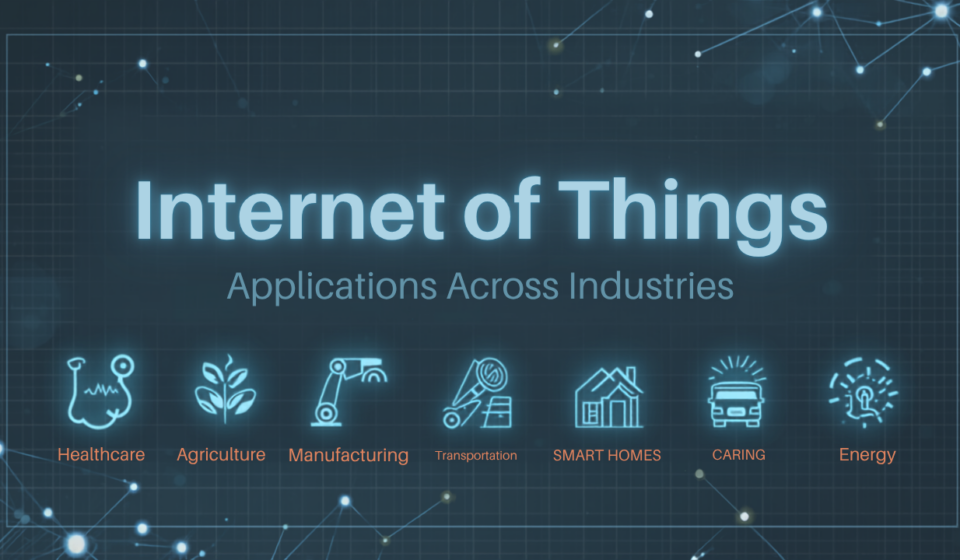
Today, IoT is no longer limited to smart homes or wearable fitness trackers. It has become an essential part of healthcare, manufacturing, agriculture, transportation, retail, energy, logistics, and many other industries. Organizations rely on connected devices to monitor assets, automate processes, detect problems early, and deliver better customer experiences.
As businesses continue their digital transformation journeys, understanding Internet of Things applications across industries provides valuable insight into how connected technologies are shaping the future.
What Is the Internet of Things
The Internet of Things refers to a network of physical devices connected through the internet that collect, exchange, and analyze data. These devices are equipped with sensors, processors, software, and communication technologies that allow them to interact with people, machines, and cloud platforms.
An IoT system generally consists of several components working together.
Connected Devices
These include sensors, cameras, smart meters, industrial equipment, wearable devices, vehicles, and household appliances that gather information from their surroundings.
Connectivity
Devices communicate using technologies such as Wi-Fi, Bluetooth, Zigbee, cellular networks, satellite communication, or low-power wide-area networks.
Cloud Computing
Data collected from devices is transmitted to cloud platforms where it is securely stored and processed.
Data Analytics
Advanced analytics and artificial intelligence convert raw information into meaningful insights that support business decisions.
User Interface
Dashboards, mobile applications, and management systems allow users to monitor devices, receive alerts, and control operations remotely.
This interconnected ecosystem enables organizations to respond quickly to changing conditions while improving operational efficiency.
Why IoT Matters Across Industries
Businesses generate enormous amounts of operational data every day. Traditionally, much of this information remained unused because manual collection was time-consuming and expensive.
IoT changes this by collecting data automatically in real time. Organizations gain continuous visibility into equipment performance, customer behavior, environmental conditions, and operational processes.
This leads to several advantages.
- Real-time monitoring
- Predictive maintenance
- Improved productivity
- Better resource utilization
- Reduced operational costs
- Enhanced customer experiences
- Greater workplace safety
- Faster decision-making
- Energy efficiency
- Data-driven business strategies
These benefits explain why IoT adoption continues to grow worldwide.
Internet of Things Applications in Manufacturing
Manufacturing has become one of the largest adopters of IoT technologies.
Factories now use connected sensors to monitor machinery, production lines, inventory, and environmental conditions throughout the manufacturing process.
Predictive Maintenance
Instead of waiting for equipment to fail, sensors continuously monitor vibration, temperature, pressure, and operating conditions.
If unusual patterns appear, maintenance teams receive alerts before major breakdowns occur.
This reduces downtime while extending equipment lifespan.
Smart Production Lines
IoT devices monitor every stage of production, identifying bottlenecks and improving quality control.
Manufacturers can optimize production schedules based on real-time demand and machine availability.
Asset Tracking
Factories often manage thousands of tools and machines.
Connected tracking systems help locate equipment instantly, reducing time spent searching for valuable assets.
A global automotive manufacturer, for example, can monitor robotic assembly equipment around the clock, ensuring maximum productivity while minimizing unexpected repairs.
IoT in Healthcare
Healthcare organizations increasingly depend on IoT to improve patient care and hospital operations.
Connected medical devices generate continuous health information that supports better clinical decisions.
Remote Patient Monitoring
Patients with chronic conditions can use wearable devices that measure heart rate, blood pressure, oxygen levels, and glucose readings.
Healthcare professionals receive updates without requiring frequent hospital visits.
Smart Medical Equipment
Hospitals use connected infusion pumps, imaging systems, and monitoring devices that automatically transmit patient information into electronic health records.
Emergency Response
Wearable emergency devices can automatically notify caregivers if a patient experiences a fall or abnormal vital signs.
This allows healthcare providers to respond more quickly during emergencies.
Remote healthcare has become particularly valuable for elderly individuals living independently while still receiving ongoing medical supervision.
Smart Agriculture with IoT
Agriculture has embraced IoT to improve productivity while conserving natural resources.
Farmers use connected devices to monitor crops, livestock, weather conditions, and irrigation systems.
Precision Farming
Soil moisture sensors determine exactly when irrigation is needed.
Instead of watering entire fields uniformly, farmers apply water only where required.
This reduces water consumption while improving crop health.
Livestock Monitoring
Wearable sensors attached to animals monitor movement, body temperature, feeding habits, and overall health.
Farmers receive alerts if an animal shows signs of illness.
Weather Monitoring
IoT weather stations collect local environmental data, helping farmers make informed planting and harvesting decisions.
These technologies improve agricultural efficiency while supporting sustainable farming practices.
IoT Applications in Transportation
Transportation companies use IoT to improve safety, logistics, and fleet management.
Connected vehicles continuously transmit operational information to centralized platforms.
Fleet Monitoring
Fleet managers can track vehicle location, fuel consumption, engine performance, and driver behavior in real time.
Route Optimization
GPS combined with traffic analytics identifies the fastest delivery routes, reducing transportation costs.
Vehicle Maintenance
Connected sensors detect engine issues before they become serious mechanical failures.
Maintenance can be scheduled proactively instead of after unexpected breakdowns.
Public transportation systems also use IoT to provide passengers with live arrival information and improve traffic management.
Retail and Customer Experience
Retail businesses use IoT to personalize shopping experiences while improving inventory management.
Smart Shelves
Connected shelves automatically detect inventory levels and notify employees when products require restocking.
Personalized Shopping
Retailers analyze customer behavior using connected technologies to recommend products based on purchasing preferences.
Automated Checkout
IoT-enabled checkout systems reduce waiting times by allowing customers to complete purchases with minimal manual interaction.
Many retailers also use connected sensors to monitor refrigeration systems, ensuring food safety throughout the supply chain.
Smart Cities and Urban Development
Cities worldwide are adopting IoT technologies to improve public services and infrastructure management.
Intelligent Traffic Systems
Traffic sensors monitor congestion and automatically adjust traffic signals to improve vehicle flow.
Smart Street Lighting
Connected streetlights adjust brightness based on pedestrian movement and weather conditions, reducing electricity consumption.
Waste Management
Smart waste bins notify collection teams only when they are nearly full, improving collection efficiency.
Environmental Monitoring
Air quality sensors measure pollution levels across cities, helping authorities identify environmental concerns more effectively.
These technologies contribute to safer, cleaner, and more sustainable urban environments.
IoT in Energy and Utilities
Utility companies use IoT to improve energy distribution while reducing operational costs.
Smart Meters
Connected electricity and water meters automatically transmit usage information without manual readings.
Consumers also gain better visibility into their energy consumption.
Grid Monitoring
Utility providers continuously monitor power infrastructure to identify faults before widespread outages occur.
Renewable Energy Management
IoT systems help optimize solar panels and wind farms by monitoring weather conditions and equipment performance.
This supports more efficient renewable energy generation.
Logistics and Supply Chain Management
Supply chains involve numerous moving parts that require accurate tracking and coordination.
IoT improves visibility from manufacturing to final delivery.
Shipment Tracking
GPS-enabled sensors provide real-time shipment locations throughout transportation.
Cold Chain Monitoring
Temperature-sensitive products such as vaccines and fresh food require continuous environmental monitoring.
IoT sensors immediately alert logistics teams if temperatures exceed safe limits.
Warehouse Automation
Connected inventory systems automatically update stock levels and improve warehouse efficiency.
This reduces inventory errors while accelerating order fulfillment.
Internet of Things in Education
Educational institutions increasingly integrate IoT into classrooms and campus management.
Smart classrooms use connected devices to improve learning experiences while optimizing facility management.
Attendance systems can automatically record student participation through connected identification technologies.
Environmental sensors monitor classroom temperature, lighting, and air quality to create comfortable learning environments.
Educational institutions also use IoT to improve campus security by monitoring access points and emergency systems.
Challenges of IoT Adoption
Although IoT offers significant advantages, organizations must also address several implementation challenges.
Cybersecurity Risks
Connected devices increase potential entry points for cyberattacks.
Organizations need strong encryption, authentication, and regular software updates to protect sensitive information.
Data Privacy
IoT devices collect large volumes of personal and operational data.
Businesses must comply with privacy regulations while maintaining customer trust.
Integration Complexity
Many organizations operate legacy systems that require careful integration with modern IoT platforms.
Planning and compatibility assessments are essential for successful deployment.
Scalability
As organizations deploy thousands of connected devices, managing infrastructure becomes increasingly complex.
Cloud platforms and edge computing help address these scalability challenges.
Emerging Trends Shaping the Future of IoT
IoT continues to evolve alongside other advanced technologies.
Several trends are expected to influence future innovation.
Artificial Intelligence Integration
AI enables IoT systems to analyze enormous datasets automatically, identifying patterns that humans might overlook.
Edge Computing
Instead of sending every piece of data to the cloud, edge computing processes information closer to the device, reducing response times.
Digital Twins
Organizations create virtual replicas of physical assets using IoT data, allowing engineers to simulate performance before making operational changes.
5G Connectivity
High-speed, low-latency 5G networks support faster communication between millions of connected devices.
Sustainable IoT
Businesses increasingly use IoT to reduce energy consumption, minimize waste, optimize water usage, and support environmental sustainability goals.
These innovations will continue expanding IoT applications across industries in the coming years.
Best Practices for Successful IoT Implementation
Organizations planning IoT initiatives should focus on long-term strategy rather than technology alone.
Clearly defining business objectives helps identify the most valuable IoT applications.
Selecting secure, scalable platforms ensures future growth without frequent infrastructure changes.
Organizations should also prioritize employee training so teams understand how to use connected technologies effectively.
Regular security updates, continuous monitoring, and ongoing performance evaluations help maintain reliable IoT ecosystems while reducing operational risks.
A well-planned implementation strategy enables businesses to maximize return on investment while supporting continuous innovation.
The Internet of Things has transformed from an emerging technology into a core component of modern business operations. Connected devices now support smarter manufacturing, better healthcare, sustainable agriculture, intelligent transportation, efficient retail, optimized logistics, and energy management. By collecting real-time information and converting it into actionable insights, IoT helps organizations improve productivity, reduce costs, and enhance customer experiences.
As artificial intelligence, edge computing, cloud platforms, and 5G networks continue to advance, IoT applications will become even more capable and widespread. Organizations that understand these technologies and implement them thoughtfully will be better positioned to adapt to changing market demands, improve operational efficiency, and drive long-term innovation in an increasingly connected world.