
Unexpected expenses are a part of life. A sudden medical bill, car repair, job loss, or home maintenance issue can quickly disrupt even the most carefully planned budget. While these situations are stressful, having an emergency fund can make a significant difference. Instead of relying on credit cards or loans, you can handle financial surprises with confidence and continue working toward your long-term financial goals.
Understanding how emergency funds help build financial stability is one of the most valuable lessons in personal finance. An emergency fund acts as a financial safety net, helping individuals and families manage uncertainty without falling into debt. It provides peace of mind while supporting healthier financial habits over time.
Whether you are just beginning your financial journey or improving your money management skills, building an emergency fund is one of the smartest financial decisions you can make.
What Is an Emergency Fund and Why Is It Important?
An emergency fund is money set aside specifically for unexpected expenses or financial emergencies. Unlike savings for vacations, holidays, or shopping, this fund should only be used for genuine emergencies that could impact your financial well-being.
Common situations where an emergency fund becomes useful include:
- Unexpected medical expenses
- Job loss or reduced income
- Emergency home repairs
- Vehicle breakdowns
- Essential appliance replacement
- Urgent travel due to family emergencies
- Natural disaster recovery expenses
The main purpose of an emergency fund is to protect your financial stability during difficult times. It allows you to cover necessary costs without borrowing money or withdrawing from long-term investments.
The Difference Between Emergency Savings and Regular Savings
Many people assume all savings serve the same purpose, but they do not.
Regular savings are usually intended for planned expenses, such as:
- Holidays
- New electronics
- Home improvements
- Education
- Weddings
Emergency savings are reserved exclusively for unexpected events. Keeping these funds separate reduces the temptation to spend emergency money on non-essential purchases.
How Much Should an Emergency Fund Contain?
Financial experts commonly recommend saving enough to cover three to six months of essential living expenses.
These expenses typically include:
- Rent or mortgage
- Utility bills
- Groceries
- Insurance premiums
- Transportation
- Loan payments
- Essential healthcare costs
For individuals with irregular income or self-employment, saving six to twelve months of expenses may provide additional financial security.
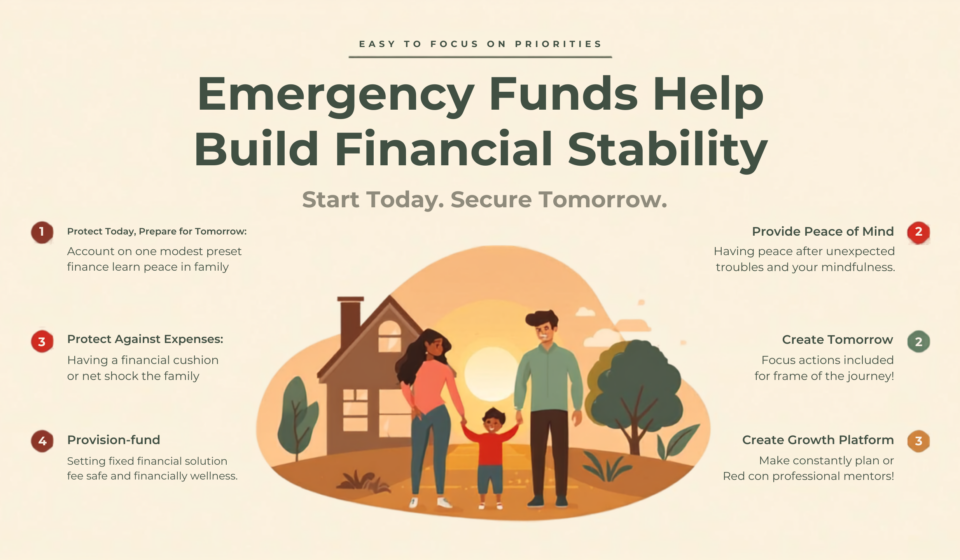
How Emergency Funds Help Build Financial Stability
Building an emergency fund offers benefits that extend far beyond having money available for unexpected bills.
Reduces Financial Stress
Money-related stress affects millions of people worldwide. Unexpected expenses often create anxiety because they disrupt carefully planned budgets.
Having emergency savings provides reassurance that financial setbacks can be managed without panic. This confidence often improves overall emotional well-being and reduces financial pressure.
Prevents High-Interest Debt
Without emergency savings, many people rely on:
- Credit cards
- Personal loans
- Payday loans
- Borrowing from friends or family
These options may solve immediate problems but often create larger financial challenges through interest payments and ongoing debt.
An emergency fund helps avoid unnecessary borrowing and protects long-term financial health.
Protects Long-Term Financial Goals
Imagine spending years saving for retirement or purchasing your first home.
Without emergency savings, an unexpected expense could force you to withdraw investment funds early or stop contributing toward important goals.
Emergency funds act as a protective barrier, allowing long-term investments to continue growing uninterrupted.
Creates Better Budgeting Habits
Saving consistently encourages better money management.
People who build emergency funds often become more aware of:
- Monthly expenses
- Spending habits
- Saving priorities
- Financial planning
- Budget adjustments
These habits contribute to stronger financial discipline over time.
Provides Greater Financial Independence
Financial stability means having greater control over your financial decisions.
When emergencies occur, individuals with emergency savings are less likely to depend on loans, family members, or employers for financial assistance.
This independence strengthens overall financial confidence.
Real-Life Example of Financial Preparedness
Imagine two coworkers, Priya and Ananya, who both earn similar salaries.
After several years of working, Priya regularly saved a small portion of her monthly income into an emergency fund. Ananya planned to save later but focused on other expenses.
One day, both experienced unexpected car repairs costing several hundred dollars.
Priya paid the repair bill directly from her emergency savings and continued with her monthly budget as usual.
Ananya used a credit card because she had no emergency savings. Although the repair was completed, interest charges increased the total amount she eventually paid.
This simple example demonstrates how emergency funds reduce financial disruption while helping avoid costly debt.
Steps to Build a Strong Emergency Fund
Building emergency savings does not happen overnight. Small, consistent actions often produce the best results.
Set a Realistic Savings Goal
Instead of aiming immediately for six months of expenses, begin with smaller milestones.
Examples include:
- First $500
- First $1,000
- One month of expenses
- Three months of expenses
- Six months of expenses
Achieving smaller goals creates motivation and encourages continued saving.
Create a Monthly Budget
A detailed budget identifies areas where money can be redirected toward emergency savings.
Review categories such as:
- Dining out
- Entertainment
- Subscription services
- Shopping
- Impulse purchases
Even modest monthly savings accumulate over time.
Automate Your Savings
Automatic transfers remove the need to remember monthly deposits.
Scheduling automatic transfers shortly after payday ensures saving becomes a regular financial habit rather than an occasional decision.
Keep Emergency Funds Easily Accessible
Emergency savings should remain available when needed.
Many people choose accounts that provide:
- Quick access
- Low risk
- Reliable security
- Interest earnings
- Separation from everyday spending accounts
Accessibility is important, but the account should not encourage unnecessary spending.
Save Unexpected Income
Extra income provides excellent opportunities to grow emergency savings faster.
Consider saving part of:
- Tax refunds
- Work bonuses
- Freelance income
- Cash gifts
- Performance incentives
These occasional earnings can significantly strengthen your financial safety net.
Common Mistakes to Avoid
Building an emergency fund requires discipline. Avoiding common mistakes helps maintain financial stability.
Using Emergency Funds for Non-Essential Purchases
An emergency fund is not designed for:
- Shopping
- Vacations
- Entertainment
- Luxury items
- Holiday spending
Only genuine emergencies should justify withdrawals.
Saving Too Little for Long Periods
While every contribution matters, increasing savings whenever possible helps reach financial goals sooner.
Review your budget regularly to identify opportunities for higher monthly contributions.
Ignoring Inflation
Living expenses increase over time.
Review your emergency fund annually to ensure it still covers several months of essential expenses.
Keeping No Separate Account
Combining emergency savings with everyday spending accounts makes accidental spending more likely.
Maintaining separate accounts creates clearer financial boundaries.
Emergency Funds and Financial Resilience
Financial resilience refers to the ability to recover from unexpected financial setbacks.
Emergency savings strengthen resilience by helping people adapt during challenging situations without making harmful financial decisions.
Examples include:
- Recovering after temporary unemployment
- Managing unexpected healthcare expenses
- Covering emergency travel
- Paying urgent home repair costs
- Replacing essential household equipment
Financial resilience allows individuals to recover faster while protecting long-term financial goals.
Emergency Funds Support Better Financial Decision-Making
Financial emergencies often create emotional pressure.
Without savings, people may rush into decisions such as:
- Accepting expensive loans
- Selling investments at poor market conditions
- Missing important bill payments
- Delaying medical treatment
Emergency funds provide time to evaluate options carefully instead of making decisions driven by panic.
The Psychological Benefits of Emergency Savings
Financial stability is not only about numbers.
Knowing money is available during emergencies improves emotional well-being in several ways.
Many people experience:
- Greater peace of mind
- Reduced anxiety
- Increased financial confidence
- Better sleep
- Improved focus at work
- More confidence when making life decisions
These psychological benefits are often overlooked but play an important role in overall financial wellness.
Emergency Funds for Different Life Stages
Emergency savings remain valuable throughout every stage of life.
Students
Students may face:
- Unexpected educational costs
- Emergency travel
- Medical expenses
- Temporary income interruptions
Even a modest emergency fund can provide valuable financial support.
Young Professionals
Early career professionals often experience:
- Career changes
- Relocation expenses
- Vehicle repairs
- Unexpected living costs
Building emergency savings early establishes strong financial habits.
Families
Families typically manage larger financial responsibilities, including:
- Childcare
- Healthcare
- Housing costs
- Education expenses
Emergency savings help maintain household stability during unexpected situations.
Self-Employed Individuals
Freelancers and business owners often experience fluctuating income.
A larger emergency fund provides greater financial security during slower business periods or unexpected income reductions.
How Emergency Funds Complement Other Financial Goals
An emergency fund does not replace other financial priorities. Instead, it strengthens them.
Emergency savings work alongside goals such as:
- Retirement planning
- Home ownership
- Higher education
- Investment portfolios
- Debt repayment
Because emergency expenses are covered separately, long-term financial plans remain on track.
Frequently Asked Questions
What qualifies as a financial emergency?
A financial emergency is an unexpected expense that is necessary and cannot reasonably be postponed. Examples include medical emergencies, job loss, urgent home repairs, and major vehicle repairs.
Where should an emergency fund be kept?
An emergency fund should be stored in a safe, easily accessible account that protects the money while allowing quick access during genuine emergencies.
Can I invest my emergency fund?
Emergency funds should prioritize safety and accessibility over higher returns. Investments that fluctuate in value may not be suitable because emergencies often require immediate access to stable funds.
How long does it take to build an emergency fund?
The timeline depends on income, expenses, and monthly savings. Consistent contributions, even in small amounts, gradually build meaningful financial security over time.
Understanding how emergency funds help build financial stability empowers individuals to prepare for life’s unexpected challenges with confidence. Emergencies are impossible to predict, but financial preparedness is entirely within your control. A dedicated emergency fund reduces stress, minimizes debt, protects long-term financial goals, and encourages smarter money management habits.
Building an emergency fund does not require a large income or dramatic lifestyle changes. It begins with small, consistent savings that grow steadily over time. Every contribution strengthens your financial safety net and increases your ability to handle unexpected expenses without compromising your future. By making emergency savings a financial priority today, you create a stronger foundation for long-term security, resilience, and lasting financial stability.