
Your credit score and credit report play a significant role in your financial life, whether you are applying for a loan, renting an apartment, getting a new credit card, or even securing better interest rates. Despite their importance, many people confuse these two financial tools or do not fully understand how they work together.
Learning how credit scores and credit reports function helps you make smarter financial decisions and avoid costly mistakes. Whether you’re building credit for the first time or trying to improve an existing score, understanding the basics can make a noticeable difference in your financial future. This guide explains everything you need to know in simple terms, helping you take control of your financial health with confidence.
What Are Credit Scores and Credit Reports?
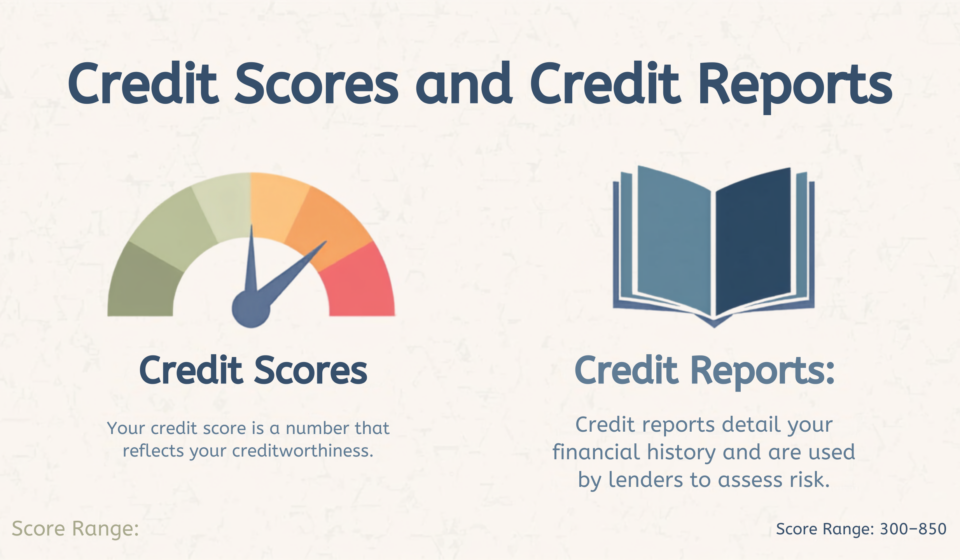
Although they are closely connected, a credit score and a credit report are not the same thing.
A credit report is a detailed record of your borrowing and repayment history. It contains information about your credit accounts, payment behavior, outstanding balances, and inquiries made by lenders.
A credit score is a numerical representation of the information found in your credit report. It summarizes your creditworthiness and gives lenders a quick way to assess the risk of lending money to you.
Think of your credit report as a complete school report card, while your credit score is the overall grade based on that report.
Quick Definition
Credit Score: A three-digit number that reflects how responsibly you manage borrowed money.
Credit Report: A detailed financial record that documents your credit history and borrowing behavior.
Both are important because lenders use them together when making lending decisions.
Why Credit Scores Matter
Your credit score influences many financial opportunities throughout your life.
A higher credit score can help you qualify for:
- Lower interest rates
- Better loan approvals
- Higher credit card limits
- Faster loan processing
- Easier mortgage approval
- Better rental opportunities
- Lower insurance premiums in some regions
On the other hand, a low credit score may lead to:
- Higher borrowing costs
- Loan rejection
- Limited credit options
- Higher security deposits
- Difficulty obtaining premium financial products
For example, two people applying for the same car loan may receive different interest rates simply because one has a stronger credit score.
What Information Appears on a Credit Report?
Your credit report contains several sections that provide lenders with a complete financial picture.
Personal Information
This section usually includes:
- Name
- Date of birth
- Current and previous addresses
- Contact information
- Identification details
Credit Accounts
This is one of the most important sections and typically includes:
- Credit cards
- Personal loans
- Auto loans
- Home loans
- Student loans
- Lines of credit
Each account generally shows:
- Credit limit
- Current balance
- Payment history
- Date opened
- Account status
Payment History
Payment history records whether bills were paid on time.
Late payments, missed payments, and defaults may remain on your report for several years depending on local regulations.
Credit Inquiries
Whenever you apply for new credit, lenders may review your report.
These inquiries are categorized as:
Hard Inquiries
Occur when you apply for:
- Credit cards
- Loans
- Mortgages
Multiple hard inquiries within a short period may temporarily reduce your credit score.
Soft Inquiries
Examples include:
- Checking your own credit report
- Pre-approved offers
- Background financial reviews
Soft inquiries generally do not affect your credit score.
How Credit Scores Are Calculated
Although different scoring models use slightly different formulas, most consider similar factors.
Payment History
This is usually the most influential factor.
Paying bills on time consistently demonstrates financial responsibility.
Even one missed payment can negatively affect your score.
Credit Utilization
Credit utilization refers to how much of your available credit you are using.
For example:
- Credit limit: $10,000
- Current balance: $2,000
Your utilization rate is 20%.
Financial experts often recommend keeping utilization below 30%, with lower percentages generally viewed more favorably.
Length of Credit History
Older credit accounts provide lenders with more information about your long-term financial habits.
Keeping long-standing accounts open can sometimes benefit your credit profile.
Credit Mix
Having different types of credit responsibly managed may positively influence your score.
Examples include:
- Credit cards
- Personal loans
- Auto loans
- Mortgages
A diverse credit portfolio demonstrates experience managing different borrowing responsibilities.
New Credit Applications
Opening several new accounts within a short period may indicate increased financial risk.
Lenders generally prefer to see responsible, gradual credit growth.
Understanding Credit Score Ranges
Credit score ranges vary depending on the scoring model used.
Generally, they fall into categories similar to:
| Credit Score | Rating |
|---|---|
| Excellent | Very low lending risk |
| Good | Above-average creditworthiness |
| Fair | Moderate risk |
| Poor | Higher lending risk |
Higher scores often result in better financial opportunities and lower borrowing costs.
Common Factors That Can Lower Your Credit Score
Several financial behaviors can reduce your score.
Missing Payments
Late or missed payments remain one of the biggest reasons credit scores decline.
Setting up automatic payments or reminders can help avoid missed due dates.
High Credit Card Balances
Using most of your available credit limit may signal financial stress to lenders.
Reducing outstanding balances often improves credit health over time.
Applying for Too Many Credit Cards
Frequent applications create multiple hard inquiries.
This may temporarily reduce your score and suggest increased borrowing needs.
Closing Old Accounts
Closing older accounts can shorten your average credit history and reduce available credit.
Before closing an account, consider how it may affect your overall credit profile.
Loan Defaults
Failing to repay loans can significantly damage your credit history and remain on your report for years.
How to Improve Your Credit Score
Improving a credit score requires patience and consistent financial habits.
Pay Bills on Time
Timely payments are one of the most effective ways to strengthen your credit profile.
Even small recurring bills contribute to a positive payment history.
Reduce Credit Utilization
Paying down balances lowers your utilization ratio.
Aim to keep balances comfortably below your available credit limits.
Avoid Unnecessary Credit Applications
Only apply for new credit when needed.
Spacing out applications helps maintain score stability.
Monitor Your Credit Report
Regularly reviewing your report allows you to identify inaccuracies or suspicious activity early.
Correcting errors promptly helps ensure your report accurately reflects your financial history.
Maintain Older Credit Accounts
Long-term accounts contribute to a longer credit history.
If possible, keep well-managed older accounts active.
How Often Should You Check Your Credit Report?
Checking your credit report regularly is a smart financial habit.
Many financial experts recommend reviewing it at least once every year.
However, checking more frequently may be beneficial if:
- You’re planning to apply for a mortgage.
- You’re applying for a car loan.
- You’ve experienced identity theft.
- You’re actively rebuilding credit.
- You’re monitoring financial progress.
Remember, checking your own report generally does not lower your credit score.
Common Credit Report Errors
Mistakes occasionally appear on credit reports.
Examples include:
- Incorrect personal information
- Accounts that don’t belong to you
- Duplicate accounts
- Incorrect payment records
- Incorrect balances
- Outdated information
If you notice an error, contact the appropriate credit reporting agency and provide supporting documentation to request a correction.
Credit Score Myths
Many misconceptions about credit scores continue to circulate.
Myth: Checking Your Own Credit Score Hurts It
Reality:
Checking your own credit score usually counts as a soft inquiry and does not affect your score.
Myth: Closing Credit Cards Always Improves Credit
Reality:
Closing accounts can reduce available credit and shorten your credit history, which may lower your score in some cases.
Myth: You Need Debt to Have Good Credit
Reality:
Responsible use of credit, rather than carrying unnecessary debt, helps build a positive credit history.
Myth: Income Determines Your Credit Score
Reality:
Income is generally not part of most credit scoring calculations.
Credit scores primarily reflect borrowing behavior and repayment history.
Tips for First-Time Credit Users
Building good credit starts with responsible habits.
If you’re new to credit:
- Pay every bill before the due date.
- Keep balances low.
- Borrow only what you can comfortably repay.
- Avoid applying for multiple credit cards at once.
- Review your credit report periodically.
- Build credit gradually rather than rushing the process.
These habits create a strong financial foundation over time.
The Relationship Between Credit Reports and Financial Goals
Whether you’re buying a home, financing higher education, starting a business, or purchasing a vehicle, lenders want confidence that you’ll repay borrowed money responsibly.
Your credit report provides the evidence.
Your credit score summarizes that evidence.
Together, they help financial institutions evaluate lending decisions while helping borrowers access more favorable financial products.
Imagine two individuals applying for the same mortgage. One has a long history of on-time payments, low credit utilization, and diverse credit accounts. The other has several missed payments and high outstanding balances. Even if both earn similar incomes, the first applicant may receive a lower interest rate because of stronger credit management. This example illustrates why maintaining healthy credit habits can save significant money over the life of a loan.
Frequently Asked Questions
Can I have a credit report without a credit score?
Yes. If there is limited credit history, a report may exist even if there isn’t enough information to generate a score using certain scoring models.
How long does it take to improve a credit score?
Improvement depends on individual circumstances. Consistently paying bills on time, reducing debt, and avoiding unnecessary credit applications can gradually strengthen your score over several months or longer.
Does paying off a loan immediately increase my score?
Paying off debt is generally positive, but score changes vary depending on your overall credit profile, account mix, and remaining credit history.
Is one missed payment a serious problem?
A single missed payment can affect your score, especially if it is reported after being significantly overdue. Promptly bringing the account current and maintaining timely payments afterward can help support long-term recovery.
Understanding credit scores and credit reports is one of the most valuable steps you can take toward achieving financial stability. While your credit report provides a detailed record of your borrowing history, your credit score offers a quick snapshot of how lenders may evaluate your creditworthiness. By paying bills on time, maintaining low credit utilization, monitoring your credit report for accuracy, and making informed borrowing decisions, you can build a stronger financial profile over time. Good credit is not built overnight, but with consistent habits and responsible financial management, it can open doors to better lending opportunities, lower borrowing costs, and greater financial confidence throughout every stage of life.

sahithya
Sahithya is a content writer specializing in digital content and online research. She is passionate about creating accurate, easy-to-understand articles that help readers make informed decisions. Every article is researched using trusted sources and official references, and is reviewed periodically to keep the information accurate and up to date