
As businesses, industries, and consumers generate more data than ever before, the demand for faster processing and instant decision-making continues to grow. Traditional cloud computing has transformed the way organizations store and process information, but it is not always the best solution for applications that require real-time responses. This is where edge computing has become increasingly important.
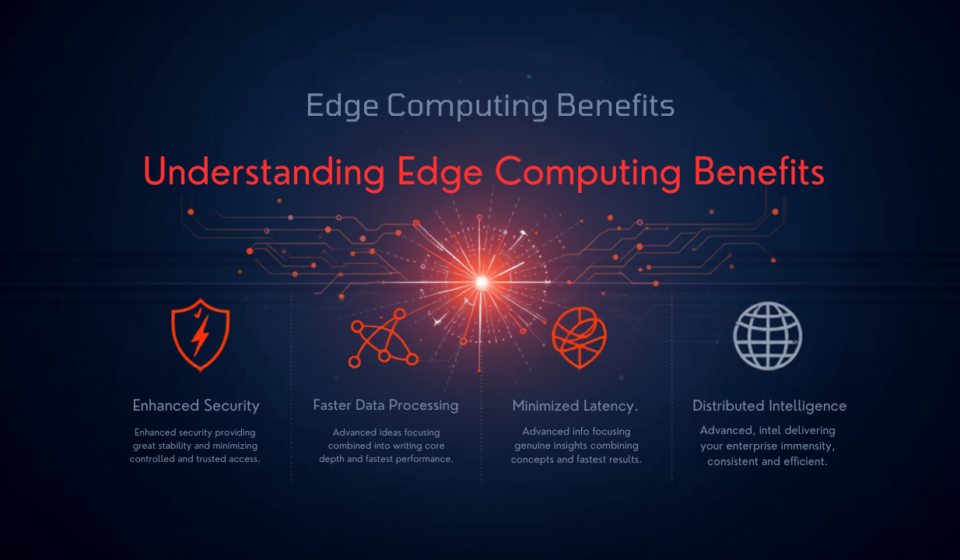
Edge computing moves data processing closer to the location where data is created rather than relying entirely on distant cloud servers. By reducing the distance data must travel, organizations can improve speed, minimize delays, strengthen security, and lower bandwidth costs. From smart factories and autonomous vehicles to healthcare monitoring and retail automation, edge computing supports technologies that require immediate insights and reliable performance.
Understanding how edge computing works and recognizing its advantages can help businesses prepare for the next generation of digital transformation.
What Is Edge Computing?
Edge computing is a distributed computing approach that processes data near the device or location where it is generated instead of sending all information to centralized cloud data centers. Edge devices may include sensors, smartphones, industrial machines, surveillance cameras, connected vehicles, or Internet of Things (IoT) devices.
Rather than transmitting every piece of data across the internet, edge systems analyze and filter information locally. Only the most relevant data is sent to cloud platforms for long-term storage, reporting, or advanced analytics.
For example, imagine a manufacturing facility with thousands of sensors monitoring equipment. Instead of sending every sensor reading to the cloud every second, edge computing analyzes the information on-site. If a machine begins showing signs of failure, maintenance teams receive immediate alerts while summarized data is stored in the cloud for future analysis.
This approach significantly improves operational efficiency while reducing unnecessary network traffic.
How Edge Computing Works
Edge computing relies on several interconnected components that work together to process data efficiently.
Edge Devices
These include IoT sensors, smart cameras, wearable devices, industrial machines, smartphones, and connected vehicles that continuously generate data.
Edge Gateways
Edge gateways collect information from multiple devices and perform filtering, aggregation, and routing before forwarding selected data to cloud systems.
Local Edge Servers
These servers provide greater computing power than individual devices. They execute applications, perform analytics, and manage workloads close to users or equipment.
Cloud Platforms
Cloud infrastructure remains important for centralized storage, historical analysis, machine learning model training, software updates, and enterprise-wide management.
Together, these components create a balanced architecture where time-sensitive processing occurs at the edge while long-term computing remains in the cloud.
Why Edge Computing Matters Today
The rapid growth of connected devices has dramatically increased data generation worldwide. Modern businesses require immediate insights to support automation, customer experiences, and operational efficiency.
Several trends have accelerated edge computing adoption, including:
- Expansion of Internet of Things devices
- Growth of artificial intelligence applications
- Increasing use of autonomous systems
- Rising demand for low-latency applications
- Deployment of 5G networks
- Smart city initiatives
- Industrial automation projects
Organizations now recognize that processing every piece of information in centralized cloud environments is not always practical or cost-effective.
Key Benefits of Edge Computing
Faster Data Processing
One of the biggest advantages of edge computing is reduced latency.
Latency refers to the delay between generating data and receiving a response. In applications like autonomous vehicles, robotic manufacturing, or emergency healthcare monitoring, even milliseconds matter.
Processing information locally allows systems to react almost instantly without waiting for cloud communication.
For example, an autonomous vehicle detecting a pedestrian cannot afford delays caused by sending data to a distant server. Edge computing enables immediate braking decisions that improve safety.
Improved Reliability
Internet connectivity is not always stable.
Edge computing allows devices and applications to continue functioning even when cloud connections become unavailable.
Factories, offshore platforms, rural healthcare facilities, and transportation systems often operate in environments where connectivity may fluctuate. Local processing ensures essential operations continue uninterrupted.
Reduced Bandwidth Usage
Sending every piece of generated data to cloud servers consumes significant network bandwidth.
Edge computing filters unnecessary information before transmission.
For example, a security camera operating 24 hours a day records thousands of hours of footage. Instead of uploading continuous video streams, edge systems can detect motion or suspicious activity and send only relevant events.
This dramatically lowers network traffic while reducing cloud storage costs.
Enhanced Security
Although no technology eliminates cybersecurity risks entirely, processing sensitive information closer to its source can improve security.
Organizations can:
- Reduce unnecessary data transmission
- Encrypt sensitive information locally
- Limit exposure of confidential records
- Improve compliance with privacy regulations
Healthcare providers, financial institutions, and government organizations often benefit from keeping sensitive information closer to local infrastructure.
Better Data Privacy
Many countries enforce strict regulations regarding personal information.
Keeping certain datasets within local facilities helps organizations comply with privacy laws while minimizing unnecessary movement of confidential information across networks.
This approach supports stronger governance and regulatory compliance.
Scalability
As organizations deploy thousands or even millions of connected devices, centralized systems may struggle to process increasing workloads efficiently.
Edge computing distributes processing across multiple locations.
Instead of overwhelming one central data center, computing resources expand alongside business growth, making large-scale deployments easier to manage.
Lower Operational Costs
Although implementing edge infrastructure requires initial investment, long-term operational savings can be significant.
Organizations often reduce expenses through:
- Lower bandwidth consumption
- Reduced cloud storage requirements
- Faster equipment maintenance
- Improved operational efficiency
- Less downtime
- Better energy management
These cost reductions often justify edge computing investments over time.
Real-Time Decision Making
Many industries rely on immediate responses.
Examples include:
- Medical monitoring devices
- Smart traffic systems
- Industrial robotics
- Autonomous drones
- Financial trading platforms
- Retail inventory management
Edge computing enables systems to analyze information and act immediately instead of waiting for centralized processing.
Real-World Applications of Edge Computing
Manufacturing
Modern factories use thousands of sensors to monitor production lines.
Edge computing identifies equipment abnormalities before failures occur.
Predictive maintenance reduces downtime, improves worker safety, and lowers repair costs.
For example, vibration sensors on industrial motors can detect wear long before visible damage occurs.
Healthcare
Hospitals increasingly use connected medical equipment for patient monitoring.
Wearable devices measuring heart rate, oxygen levels, and blood pressure generate continuous streams of data.
Edge computing enables healthcare professionals to receive instant alerts when abnormal readings appear, allowing faster medical intervention.
Retail
Retailers use edge computing for:
- Smart shelves
- Self-checkout systems
- Inventory monitoring
- Customer traffic analysis
- Personalized shopping experiences
Stores can process customer behavior locally while reducing delays during busy shopping periods.
Transportation
Connected transportation systems depend on rapid decision-making.
Applications include:
- Fleet management
- Smart traffic signals
- Railway monitoring
- Connected logistics
- Autonomous vehicles
Processing information locally improves safety and operational efficiency.
Agriculture
Smart farming increasingly relies on connected sensors.
Edge computing analyzes:
- Soil moisture
- Weather conditions
- Irrigation systems
- Livestock monitoring
- Crop health
Farmers receive immediate recommendations that improve productivity while reducing water usage.
Smart Cities
Cities generate enormous volumes of information from surveillance cameras, traffic systems, utilities, and environmental sensors.
Edge computing supports:
- Traffic optimization
- Public safety monitoring
- Energy management
- Waste collection
- Air quality analysis
These capabilities improve urban services while reducing infrastructure costs.
Edge Computing vs Cloud Computing
Although edge computing receives considerable attention, it does not replace cloud computing.
Instead, both technologies complement one another.
| Edge Computing | Cloud Computing |
|---|---|
| Processes data near its source | Processes data in centralized data centers |
| Supports low latency | Suitable for large-scale processing |
| Reduces bandwidth usage | Offers virtually unlimited storage |
| Ideal for real-time applications | Best for historical analytics |
| Works during connectivity interruptions | Depends on reliable internet access |
Many organizations adopt hybrid architectures where edge computing handles immediate tasks while cloud platforms perform deeper analytics and long-term storage.
The Role of Edge Computing in Artificial Intelligence
Artificial intelligence has significantly increased demand for edge computing.
AI models often require rapid decision-making.
Instead of sending every image or sensor reading to cloud servers, AI algorithms running on edge devices can:
- Detect defects in manufacturing
- Recognize faces in security systems
- Identify diseases in medical imaging
- Analyze traffic conditions
- Monitor wildlife
- Detect equipment failures
Known as Edge AI, this approach combines artificial intelligence with local processing to deliver faster and more reliable outcomes.
Challenges of Edge Computing
Despite its many advantages, organizations should also understand potential challenges.
Infrastructure Complexity
Managing thousands of distributed devices can be more complex than maintaining centralized cloud infrastructure.
Organizations require effective monitoring, updates, and maintenance strategies.
Cybersecurity Risks
Every connected edge device represents a potential attack surface.
Strong authentication, encryption, secure firmware updates, and continuous monitoring remain essential.
Hardware Costs
Deploying edge servers, gateways, and intelligent devices requires upfront investment.
Businesses should evaluate long-term operational savings when calculating return on investment.
Data Management
Synchronizing information between edge locations and cloud platforms requires careful planning.
Organizations need reliable policies for data consistency, backup, and governance.
Skilled Workforce
Successful edge deployments require expertise in networking, cybersecurity, IoT, cloud computing, artificial intelligence, and distributed systems.
Investing in employee training becomes increasingly important.
Best Practices for Successful Edge Computing Adoption
Organizations planning edge computing initiatives can improve outcomes by following several best practices.
Begin by identifying workloads that truly benefit from low-latency processing rather than moving every application to the edge.
Develop strong cybersecurity strategies that include device authentication, encryption, software patching, and continuous monitoring.
Choose scalable infrastructure capable of supporting future growth without major redesigns.
Integrate edge systems with existing cloud platforms to create a balanced architecture.
Monitor device performance continuously using centralized management tools.
Establish clear governance policies for data storage, retention, privacy, and compliance.
Finally, measure performance improvements regularly to evaluate return on investment and identify opportunities for optimization.
Future Trends in Edge Computing
Edge computing continues evolving alongside advances in digital technology.
Several emerging trends are expected to shape its future:
Edge AI Expansion
Artificial intelligence models will increasingly operate directly on edge devices, enabling faster predictions while reducing cloud dependency.
5G Integration
High-speed 5G networks will improve communication between connected devices and edge infrastructure, supporting more advanced real-time applications.
Increased IoT Adoption
As billions of IoT devices continue entering homes, businesses, and industries, edge computing will become essential for managing growing data volumes efficiently.
Autonomous Systems
Self-driving vehicles, delivery robots, drones, and industrial automation systems will rely heavily on edge computing to make split-second decisions.
Sustainable Computing
Organizations are exploring energy-efficient edge infrastructure that minimizes network traffic and optimizes power consumption while supporting environmental sustainability goals.
Frequently Asked Questions
What is the main purpose of edge computing?
Edge computing processes data closer to where it is generated, reducing latency, improving performance, and enabling faster decision-making.
Is edge computing replacing cloud computing?
No. Edge computing complements cloud computing by handling real-time processing locally while the cloud provides centralized storage, analytics, and large-scale computing resources.
Which industries benefit most from edge computing?
Manufacturing, healthcare, retail, transportation, agriculture, telecommunications, finance, and smart cities all benefit from faster processing and improved operational efficiency.
Does edge computing improve security?
Edge computing can strengthen security by limiting unnecessary data transfers and keeping sensitive information closer to its source. However, organizations must still implement strong cybersecurity measures to protect distributed devices.
Why is edge computing important for IoT?
IoT devices generate massive amounts of data. Edge computing processes this information locally, reducing bandwidth usage, enabling real-time responses, and improving the performance of connected systems.
Edge computing has become a critical technology for organizations seeking faster, smarter, and more efficient ways to process growing volumes of data. By bringing computation closer to connected devices, businesses can reduce latency, improve reliability, strengthen security, and support real-time decision-making across a wide range of industries.
Rather than replacing cloud computing, edge computing enhances modern digital infrastructure by creating a balanced environment where immediate processing happens locally while centralized platforms continue to provide scalable storage and advanced analytics. As artificial intelligence, IoT, and 5G networks continue to evolve, edge computing is expected to play an increasingly important role in enabling innovative applications, improving operational efficiency, and supporting the future of connected technologies.

sahithya
Sahithya is a content writer specializing in digital content and online research. She is passionate about creating accurate, easy-to-understand articles that help readers make informed decisions. Every article is researched using trusted sources and official references, and is reviewed periodically to keep the information accurate and up to date