
Financial success rarely happens by accident. It is usually the result of thoughtful planning, disciplined habits, and consistent decision-making over time. Whether your goal is to buy a home, build an emergency fund, retire comfortably, or simply gain better control over your finances, having clear financial goals provides the direction needed to make smarter choices every day.
Many people focus on earning more money, but income alone does not guarantee financial security. Without a structured plan, even high earners can struggle with debt, overspending, or missed opportunities to save and invest. Financial goal setting creates a roadmap that connects today’s financial decisions with tomorrow’s aspirations.
This guide explains how to create realistic financial goals, prioritize them effectively, and develop habits that support long-term financial success. It also explores common challenges, practical strategies, and expert recommendations that can help individuals stay on track regardless of their current financial situation.
Why Financial Goal Setting Matters
Financial goal setting is the process of identifying what you want to achieve with your money and creating a practical plan to reach those objectives. Goals transform vague wishes like “I want to save more” into measurable targets such as “Save ₹5 lakh for a home down payment within five years.”
Without clear goals, financial decisions often become reactive rather than intentional. People may spend impulsively, delay saving, or invest without understanding their long-term needs.
Setting financial goals offers several important benefits.
Provides Clear Direction
A well-defined financial goal acts as a roadmap. Instead of wondering how much to save each month, you already know the amount required to achieve your target.
Encourages Better Spending Decisions
People who understand their priorities often find it easier to distinguish between needs and wants. This naturally supports better budgeting and responsible spending.
Reduces Financial Stress
Unexpected expenses become easier to manage when emergency savings and financial planning are already part of your strategy.
Builds Long-Term Wealth
Consistent saving and investing over many years can significantly increase wealth through the power of compound growth.
For example, someone investing a fixed amount every month beginning in their twenties generally accumulates considerably more wealth than someone who starts investing later, even if the later investor contributes larger monthly amounts.
Understanding Different Types of Financial Goals
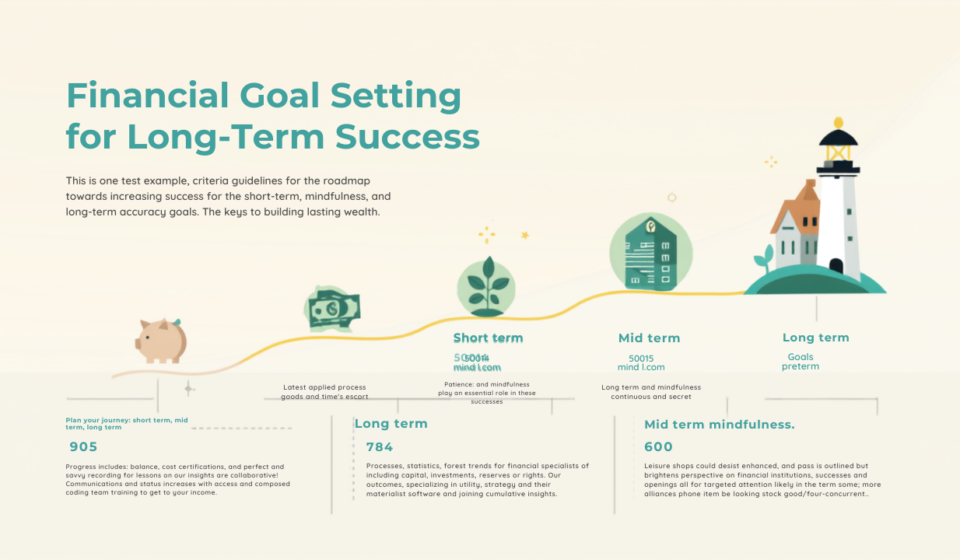
Not every financial goal has the same timeline. Organizing goals based on time helps determine appropriate saving and investment strategies.
Short-Term Financial Goals
Short-term goals are usually achieved within one year.
Examples include:
- Building an emergency fund
- Paying off credit card balances
- Saving for a vacation
- Purchasing household appliances
- Creating a monthly budget
These goals often require high liquidity, making savings accounts or similar low-risk options appropriate.
Medium-Term Financial Goals
Medium-term goals generally take one to five years.
Examples include:
- Buying a vehicle
- Paying for higher education
- Starting a small business
- Saving for a wedding
- Home renovations
Balanced investment strategies may become appropriate depending on individual risk tolerance and time horizon.
Long-Term Financial Goals
Long-term goals extend beyond five years.
Examples include:
- Retirement planning
- Children’s education
- Purchasing a home
- Building investment wealth
- Achieving financial independence
Longer investment horizons often allow greater flexibility to manage market fluctuations while pursuing higher potential returns.
How to Set Effective Financial Goals
Simply writing down financial wishes is not enough. Effective goals should be practical, measurable, and aligned with personal priorities.
Identify Your Priorities
Begin by asking meaningful questions.
- What does financial success mean to you?
- Which financial goals are most important?
- What lifestyle do you hope to achieve?
- What responsibilities will you have in the future?
Your answers help shape realistic financial objectives.
Evaluate Your Current Financial Situation
Before planning ahead, understand your current position.
Review:
- Monthly income
- Monthly expenses
- Existing debt
- Savings
- Investments
- Insurance coverage
Knowing your financial starting point allows you to create realistic goals instead of unrealistic expectations.
Make Goals Specific
Specific goals are easier to follow than general intentions.
Instead of saying:
“I want to save money.”
Consider:
“I will save ₹10,000 every month to build a ₹6 lakh emergency fund over five years.”
Specific goals improve motivation because progress becomes visible.
Set Realistic Deadlines
Every financial goal should include a target date.
Deadlines create accountability while helping determine the monthly savings or investment required.
Review Goals Regularly
Financial situations change due to career growth, family responsibilities, inflation, or unexpected life events.
Reviewing financial goals annually helps ensure they remain practical and relevant.
Building a Financial Plan Around Your Goals
Financial goals become meaningful only when supported by a practical action plan.
Create a Monthly Budget
Budgeting remains one of the most effective financial management tools.
A simple budget helps monitor:
- Income
- Essential expenses
- Savings
- Investments
- Discretionary spending
Tracking expenses often reveals unnecessary spending that can be redirected toward financial goals.
Build an Emergency Fund
Financial experts generally recommend maintaining emergency savings that cover several months of essential living expenses.
Emergency funds help protect long-term investments from being withdrawn during unexpected situations such as medical emergencies or job loss.
Manage Debt Wisely
High-interest debt can significantly slow financial progress.
Prioritizing debt repayment may improve overall financial stability while reducing interest costs over time.
Invest Consistently
Saving protects money, while investing provides opportunities for long-term growth.
Investment decisions should always align with individual financial goals, time horizons, and risk tolerance.
Diversification across different asset classes may help manage investment risk.
The Role of Inflation in Long-Term Financial Planning
Inflation gradually reduces purchasing power over time.
For example, an expense that costs ₹10 lakh today may require substantially more money twenty years from now due to inflation.
Ignoring inflation when setting financial goals may result in savings that fall short of future needs.
Long-term financial planning should therefore account for rising living costs, healthcare expenses, education costs, and retirement requirements.
Smart Saving Habits That Support Financial Success
Financial success depends more on consistency than perfection.
Several habits can strengthen long-term financial outcomes.
Automate Savings
Automatic transfers reduce the temptation to spend money before saving it.
Many people find it easier to stay consistent when savings occur immediately after receiving income.
Increase Savings Gradually
As income grows, increasing monthly savings can accelerate financial progress without significantly affecting lifestyle.
Avoid Lifestyle Inflation
Higher income often leads to higher spending.
Maintaining reasonable spending habits while increasing savings helps build wealth more efficiently.
Track Progress
Monitoring financial progress provides motivation and identifies areas requiring adjustment.
Simple spreadsheets, budgeting apps, or financial journals can help maintain accountability.
Common Mistakes to Avoid
Many individuals face financial setbacks because of avoidable planning mistakes.
Setting Unrealistic Goals
Extremely ambitious goals without practical planning often lead to disappointment and loss of motivation.
Ignoring Risk Management
Insurance plays an important role in protecting financial goals from unexpected medical expenses, accidents, or income loss.
Delaying Investments
Time is one of the most valuable assets in wealth creation.
Even small, consistent investments made early can benefit from years of compound growth.
Not Reviewing Financial Plans
Life changes such as marriage, career advancement, children, or retirement require adjustments to financial strategies.
Regular reviews help maintain alignment with changing priorities.
Real-Life Example of Financial Goal Setting
Consider two professionals who both begin their careers at age twenty-five.
Priya decides to create a financial roadmap. She builds an emergency fund, contributes regularly to long-term investments, purchases appropriate insurance, and increases her savings whenever her salary rises.
Rahul earns a similar income but postpones saving because he believes he has plenty of time. His spending gradually increases with each salary increment, leaving little room for long-term investments.
After fifteen years, Priya has accumulated substantial savings, investment growth, and financial confidence. Rahul, despite earning comparable income, faces greater financial pressure because he delayed planning.
This example demonstrates that consistent habits often have a greater impact than income alone.
Expert Insights on Financial Planning
Financial planners consistently emphasize that successful financial management is built on clear objectives rather than market predictions.
Behavioral finance research also shows that people who establish written financial goals are generally more likely to maintain consistent saving habits than those without documented plans.
Experts further recommend reviewing financial plans at least once a year or after major life events such as marriage, career changes, childbirth, or retirement planning.
Long-term success is often less about finding the perfect investment and more about maintaining disciplined financial behavior throughout different economic conditions.
Frequently Asked Questions
What is financial goal setting?
Financial goal setting is the process of identifying specific financial objectives and creating a structured plan to achieve them within a defined timeframe.
Why are financial goals important?
Financial goals provide direction, improve budgeting decisions, encourage disciplined saving, and support long-term financial stability.
How often should financial goals be reviewed?
Most financial experts recommend reviewing financial goals annually or whenever significant life changes occur.
What is the difference between saving and investing?
Saving focuses on preserving money for short-term needs, while investing seeks long-term growth through assets that may increase in value over time.
Can small savings make a difference?
Yes. Consistent small contributions can accumulate significantly over many years, particularly when investment returns compound over time.
Building Financial Confidence for the Future
Financial planning is not about predicting every future expense or eliminating every financial challenge. Instead, it is about creating a flexible framework that helps you make informed decisions, adapt to changing circumstances, and steadily move toward your objectives. Every financial milestone, whether paying off debt, growing savings, or investing for retirement, begins with a clear goal and a commitment to consistent action.
Long-term financial success is achieved through patience, discipline, and continuous learning rather than quick solutions. By setting meaningful financial goals, tracking progress regularly, managing risks responsibly, and adjusting your strategy as life evolves, you create a stronger foundation for lasting financial well-being. Small, consistent steps taken today can lead to greater financial security and confidence in the years ahead.