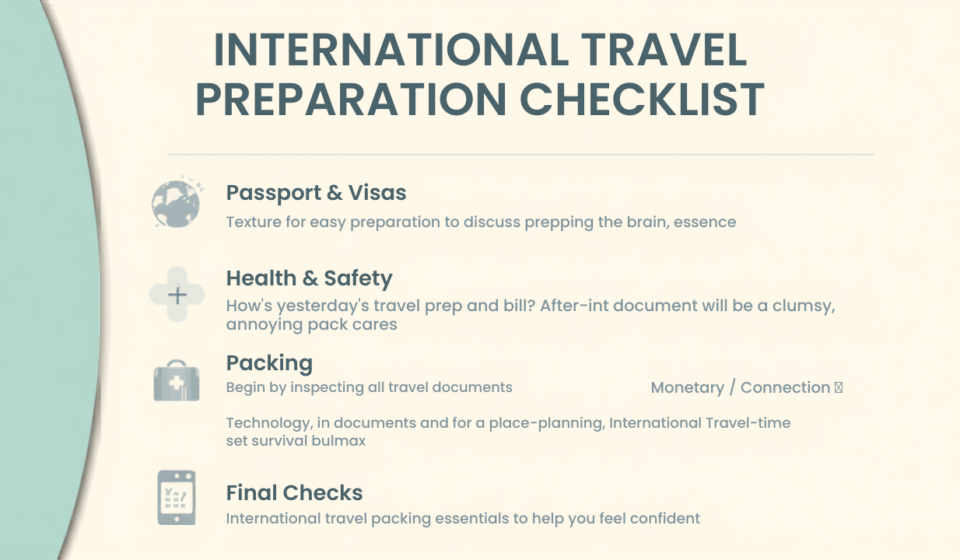

Traveling to another country is an exciting experience that offers opportunities to explore new cultures, cuisines, landscapes, and traditions. However, international travel also requires thoughtful planning to avoid unnecessary stress. Missing documents, forgotten essentials, or unexpected health and financial issues can quickly disrupt an otherwise enjoyable journey.
A comprehensive international travel preparation checklist helps travelers stay organized from the moment they begin planning until they return home. Whether it is your first overseas trip or you travel frequently, preparing in advance reduces risks and increases confidence. Every destination has different entry requirements, weather conditions, transportation systems, and cultural expectations, making preparation an essential part of the travel experience.
This guide explains the key steps involved in preparing for international travel, helping travelers organize documents, manage budgets, pack efficiently, and stay safe throughout their journey.
Why an International Travel Preparation Checklist Matters
International travel involves more planning than domestic travel because travelers must comply with immigration rules, health regulations, airline requirements, and local laws.
A structured checklist helps travelers:
- Avoid last-minute emergencies.
- Keep travel documents organized.
- Reduce unnecessary expenses.
- Prepare for different weather conditions.
- Stay healthy during the trip.
- Protect valuables and personal information.
- Improve overall travel confidence.
Travel experts often recommend beginning preparations several weeks before departure, especially when visas, vaccinations, or passport renewals are required.
Start Planning Several Weeks Before Departure
Many travel-related tasks require processing time. Passport renewals, visa approvals, travel insurance, and vaccination appointments cannot always be completed quickly.
Creating a timeline several weeks before departure allows enough time to gather documents, compare travel options, and solve unexpected problems without unnecessary pressure.
A simple planning calendar may include:
- Confirm travel dates.
- Book flights and accommodation.
- Apply for visas if required.
- Schedule medical appointments.
- Arrange travel insurance.
- Prepare financial resources.
- Create a packing checklist.
Starting early often leads to better travel deals and fewer last-minute expenses.
Verify Passport and Visa Requirements
The passport is the most important document for international travel.
Many countries require passports to remain valid for at least six months beyond the planned departure date. Travelers should carefully check expiration dates well before booking flights.
Visa requirements differ from country to country. Some destinations offer visa-free entry, while others require electronic travel authorization or embassy-issued visas.
Before traveling, verify:
- Passport validity.
- Number of blank passport pages.
- Visa requirements.
- Entry restrictions.
- Transit visa rules for connecting flights.
Keeping both printed and digital copies of important documents provides additional security if originals are lost.
Organize Important Travel Documents
Keeping documents organized saves valuable time during airport check-in and immigration procedures.
Important documents include:
- Passport
- Visa documents
- Flight tickets
- Hotel confirmations
- Travel insurance policy
- Emergency contacts
- Driver’s license if renting a vehicle
- Vaccination certificates if required
Many travelers also store encrypted digital copies in secure cloud storage for backup.
Plan Your Travel Budget Carefully
International trips involve more expenses than transportation and accommodation.
Creating a realistic travel budget helps travelers avoid financial stress while abroad.
Budget categories often include:
- Airfare
- Accommodation
- Local transportation
- Meals
- Attraction tickets
- Shopping
- Emergency expenses
- Currency exchange fees
A daily spending estimate helps maintain financial control throughout the trip.
Notify Your Bank Before Traveling
Unexpected overseas transactions sometimes trigger fraud protection systems, leading to temporarily blocked cards.
Informing banks about travel dates and destinations reduces this risk.
Travelers should also:
- Carry multiple payment methods.
- Keep some local currency.
- Store emergency cash separately.
- Understand international transaction fees.
Digital wallets and contactless payments are increasingly accepted worldwide, but cash remains useful in many destinations.
Purchase Travel Insurance
Travel insurance is often overlooked until something goes wrong.
Unexpected medical emergencies, flight cancellations, baggage loss, or trip interruptions can result in significant expenses.
A comprehensive travel insurance policy may include:
- Emergency medical treatment
- Hospitalization
- Trip cancellation
- Lost luggage
- Travel delays
- Emergency evacuation
- Personal liability
Reading policy coverage carefully helps travelers understand limitations and exclusions before departure.
Check Health Requirements Before Traveling
Different countries have different health recommendations and vaccination requirements.
Some destinations require proof of vaccination before entry, while others recommend preventive medications for specific diseases.
Travelers should schedule a medical consultation before departure to discuss:
- Routine vaccinations
- Destination-specific vaccines
- Prescription medications
- Motion sickness prevention
- Allergies
- Medical conditions
Carrying medications in original labeled containers helps simplify airport security checks.
Prepare a Personal Medical Kit
A basic travel medical kit often includes:
- Prescription medicines
- Pain relievers
- Bandages
- Antiseptic wipes
- Motion sickness tablets
- Anti-diarrheal medication
- Hand sanitizer
- Insect repellent
- Sunscreen
Preparing these items in advance helps manage minor health issues during travel.
Research Your Destination
Understanding the destination before arrival makes travel more enjoyable and reduces confusion.
Research topics may include:
- Local customs
- Cultural etiquette
- Transportation systems
- Weather conditions
- Emergency services
- Popular attractions
- Local holidays
- Currency
- Safety recommendations
For example, some countries expect modest clothing at religious sites, while others have specific tipping customs or public behavior guidelines.
Learning a few basic local phrases such as greetings and polite expressions often creates positive interactions with local residents.
Pack Smart Instead of Packing More
Overpacking makes transportation more difficult and often results in unnecessary baggage fees.
Experienced travelers recommend packing versatile clothing that matches the destination’s climate.
Packing essentials include:
- Passport and documents
- Chargers and adapters
- Comfortable shoes
- Weather-appropriate clothing
- Toiletries
- Reusable water bottle
- Small day bag
- Power bank
- Universal travel adapter
Rolling clothes instead of folding them helps maximize luggage space while reducing wrinkles.
Understand Airline Baggage Policies
Every airline has different baggage allowances.
Before traveling, confirm:
- Cabin baggage limits
- Checked baggage weight
- Restricted items
- Liquid regulations
- Battery transportation rules
Checking these policies in advance prevents delays and unexpected airport charges.
Secure Your Digital Devices
Modern travelers rely heavily on smartphones, laptops, tablets, and online banking.
Protecting digital information is an important part of travel preparation.
Recommended digital safety practices include:
- Enable device passwords.
- Use biometric security.
- Activate device tracking.
- Back up important files.
- Install software updates.
- Avoid unsecured public Wi-Fi.
- Use secure internet connections when accessing financial accounts.
Charging cables and portable power banks should also be packed in easily accessible locations.
Prepare for Airport and Immigration Procedures
International airports can be busy, especially during holiday seasons.
Arriving several hours before departure provides sufficient time for:
- Check-in
- Security screening
- Immigration
- Boarding
Keeping travel documents easily accessible speeds up each step.
Immigration officers may ask questions about:
- Purpose of travel
- Length of stay
- Accommodation
- Return ticket
- Financial resources
Answering honestly and confidently helps ensure smooth processing.
Stay Safe Throughout Your Journey
Safety remains one of the most important aspects of international travel.
Simple precautions greatly reduce travel risks.
Useful safety practices include:
- Share travel itineraries with family.
- Avoid displaying expensive valuables.
- Stay aware of surroundings.
- Use licensed transportation.
- Keep emergency contact numbers.
- Lock luggage securely.
- Store passports safely.
Many travelers also register with their country’s travel advisory services before departure for emergency updates.
Respect Local Culture and Laws
Every country has unique traditions, customs, and legal systems.
Respecting local culture creates positive experiences and helps avoid misunderstandings.
Examples include:
- Following local dress codes.
- Respecting photography restrictions.
- Observing public behavior expectations.
- Understanding tipping etiquette.
- Learning basic cultural greetings.
Small efforts to understand local customs often leave lasting positive impressions on both visitors and local communities.
Create an Emergency Backup Plan
Even well-planned trips may encounter unexpected situations.
Preparing backup plans improves peace of mind.
Travelers should prepare:
- Emergency contacts.
- Embassy information.
- Backup payment cards.
- Copies of important documents.
- Travel insurance contact details.
- Offline maps.
- Hotel contact information.
Having these resources readily available makes handling emergencies much easier.
Common International Travel Mistakes to Avoid
Many travel challenges result from simple planning mistakes.
Some of the most common include:
Ignoring Passport Expiration
Many travelers discover too late that their passport does not meet destination validity requirements.
Packing Too Much
Heavy luggage creates inconvenience throughout the journey.
Forgetting Travel Insurance
Medical emergencies abroad can become extremely expensive without adequate coverage.
Not Checking Weather Forecasts
Unexpected climate conditions often require clothing travelers did not pack.
Relying on a Single Payment Method
Carrying only one bank card increases financial risk if it becomes lost or blocked.
Skipping Destination Research
Understanding transportation, customs, and safety information helps avoid unnecessary confusion after arrival.
Frequently Asked Questions
How early should international travel preparations begin?
Starting preparations four to eight weeks before departure provides enough time for passports, visas, vaccinations, travel insurance, and itinerary planning.
Is travel insurance necessary for international travel?
Although requirements vary by destination, travel insurance provides financial protection against unexpected medical expenses, cancellations, travel delays, and lost baggage, making it a valuable part of trip planning.
What documents should travelers carry?
Essential documents typically include a valid passport, visa if required, flight tickets, accommodation confirmations, travel insurance information, emergency contacts, and identification documents.
How much local currency should travelers carry?
Carrying enough local currency for transportation, meals, and small purchases after arrival is helpful, while using secure digital payment methods for larger expenses whenever available.
International travel becomes far more enjoyable when every important detail is planned in advance. A well-prepared travel checklist helps organize documents, manage finances, pack efficiently, protect personal health, and reduce unnecessary stress throughout the journey. From confirming passport validity and understanding visa requirements to researching local customs and preparing emergency backups, each step contributes to a safer and more rewarding travel experience. Careful preparation allows travelers to focus less on logistical challenges and more on discovering new places, meeting new people, and creating memorable experiences that last long after the journey has ended.

sahithya
Sahithya is a content writer specializing in digital content and online research. She is passionate about creating accurate, easy-to-understand articles that help readers make informed decisions. Every article is researched using trusted sources and official references, and is reviewed periodically to keep the information accurate and up to date