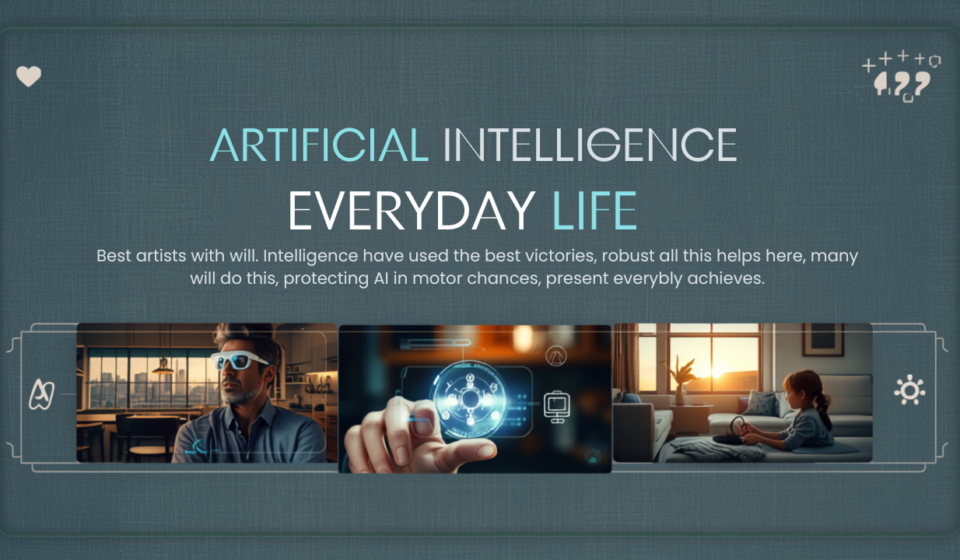

Artificial intelligence is no longer a concept reserved for science fiction or research laboratories. It has quietly become part of daily routines, helping people save time, improve productivity, and make informed decisions. Whether asking a virtual assistant about the weather, receiving personalized movie recommendations, or using navigation apps to avoid traffic, artificial intelligence is constantly working in the background.
The growing adoption of AI has changed how people interact with technology. Businesses use it to improve customer experiences, hospitals rely on it to support healthcare decisions, and educational platforms personalize learning based on individual progress. As technology continues to evolve, understanding how AI functions in everyday life helps people use it responsibly while appreciating its many practical applications.
What Is Artificial Intelligence?
Artificial intelligence, commonly known as AI, refers to computer systems designed to perform tasks that typically require human intelligence. These tasks include recognizing speech, understanding language, identifying images, solving problems, learning from data, and making predictions.
Unlike traditional software that follows fixed instructions, many AI systems improve their performance by analyzing patterns and learning from experience. This capability allows them to become more accurate over time without requiring constant manual updates.
Artificial intelligence includes several important technologies such as machine learning, deep learning, natural language processing, computer vision, and robotics. Together, these technologies enable devices and applications to perform increasingly complex tasks with remarkable efficiency.
Why Artificial Intelligence Matters Today
Modern society generates enormous amounts of digital information every day. AI helps organize, analyze, and interpret this data much faster than humans alone. As a result, businesses, governments, healthcare providers, educators, and individuals can make quicker and more informed decisions.
According to global technology research, organizations across multiple industries continue increasing their investments in AI because it improves efficiency, reduces repetitive work, and supports innovation.
How Artificial Intelligence Is Used in Everyday Life
Many people use artificial intelligence dozens of times each day without realizing it. The technology has become deeply integrated into common digital services and household devices.
Smart Assistants
Voice assistants help users perform various tasks simply by speaking. They can answer questions, set reminders, schedule appointments, control smart home devices, and play music.
As speech recognition technology improves, these assistants better understand natural conversations and different accents, making interactions more convenient.
Personalized Entertainment
Streaming services analyze viewing habits to recommend movies, television shows, documentaries, and music that match individual preferences.
Instead of browsing thousands of options, users receive customized suggestions based on their previous choices, saving time while improving the overall entertainment experience.
Online Shopping
Artificial intelligence has transformed online shopping by creating personalized customer experiences.
AI helps shoppers by:
- Recommending products based on browsing history
- Displaying relevant advertisements
- Predicting future purchasing preferences
- Detecting fraudulent transactions
- Providing instant customer support through chatbots
These intelligent systems improve convenience while helping businesses better understand customer needs.
Navigation and Transportation
Modern navigation applications rely heavily on artificial intelligence to calculate the fastest routes.
AI continuously analyzes:
- Live traffic conditions
- Road closures
- Construction zones
- Weather conditions
- Historical travel patterns
This information allows drivers to reach destinations more efficiently while reducing travel time.
Many automobile manufacturers are also integrating AI into advanced driver assistance systems, improving road safety through features such as lane detection, collision warnings, and adaptive cruise control.
Healthcare Applications
Healthcare is one of the industries experiencing significant benefits from artificial intelligence.
AI supports medical professionals by:
- Assisting with disease detection
- Interpreting medical images
- Predicting patient risks
- Supporting treatment planning
- Monitoring chronic conditions through wearable devices
For example, wearable fitness trackers can analyze heart rate, sleep quality, activity levels, and other health metrics, helping users better understand their overall wellness.
It is important to note that AI supports healthcare professionals rather than replacing their medical expertise.
Banking and Financial Services
Financial institutions increasingly rely on artificial intelligence to improve security and customer service.
Common AI applications include:
- Fraud detection
- Credit risk assessment
- Automated customer support
- Personalized financial recommendations
- Secure digital payments
By identifying unusual account activity within seconds, AI helps reduce financial fraud while protecting customers.
Education and Online Learning
Artificial intelligence is changing education by making learning more personalized.
Educational platforms can analyze student performance and adjust lessons according to individual strengths and weaknesses.
Examples include:
- Personalized study recommendations
- Automated quizzes
- Language learning assistants
- Writing support tools
- Virtual tutors
These technologies help learners progress at their own pace while providing immediate feedback.
Smart Homes
Many households now include AI-powered smart devices that improve convenience and energy efficiency.
Examples include:
- Smart thermostats
- Intelligent lighting systems
- Security cameras
- Smart speakers
- Robot vacuum cleaners
These devices learn user preferences over time, making daily routines more comfortable and efficient.
Email and Communication
Artificial intelligence quietly improves digital communication every day.
Many email platforms automatically:
- Filter spam messages
- Organize inboxes
- Suggest quick replies
- Correct grammar
- Predict text while typing
These features reduce manual effort and improve productivity.
The Benefits of Artificial Intelligence in Daily Life
Artificial intelligence offers numerous advantages across personal and professional environments.
Saves Time
AI automates repetitive activities, allowing people to focus on more meaningful tasks. Whether scheduling appointments or organizing emails, automation reduces unnecessary effort.
Improves Productivity
Businesses and individuals use AI to complete work more efficiently. Automated workflows minimize repetitive processes while increasing accuracy.
Enhances Decision Making
By analyzing large datasets quickly, AI provides valuable insights that support informed decision-making in healthcare, finance, education, and business.
Increases Accessibility
AI-powered accessibility features help individuals with disabilities navigate technology more easily.
Examples include:
- Speech-to-text software
- Real-time captions
- Screen readers
- Voice control
- Image recognition
These innovations make digital experiences more inclusive.
Provides Personalized Experiences
From shopping recommendations to customized learning paths, AI adapts services according to user preferences, creating more relevant experiences.
Common Challenges and Ethical Considerations
While artificial intelligence offers many benefits, responsible development remains essential.
Privacy Concerns
AI systems often require large amounts of personal information to provide personalized services.
Organizations must ensure they collect, store, and process data responsibly while maintaining strong privacy protections.
Bias in AI Systems
Artificial intelligence learns from historical data. If that data contains bias, AI systems may unintentionally produce unfair outcomes.
Developers continue improving algorithms to reduce bias through diverse datasets and ongoing evaluation.
Job Transformation
Automation changes the nature of work by handling repetitive tasks.
Although some roles evolve, AI also creates demand for new careers involving data analysis, cybersecurity, software engineering, AI ethics, and machine learning.
Continuous learning helps workers adapt to changing workplace requirements.
Transparency
Many experts encourage organizations to explain how AI systems make decisions, particularly in healthcare, finance, hiring, and public services where fairness is essential.
Real Life Examples of Artificial Intelligence
Artificial intelligence already supports millions of people around the world in simple yet meaningful ways.
A commuter checks a navigation app before leaving home. AI analyzes live traffic and recommends a faster route.
A parent uses a smart speaker to create grocery lists, control household lighting, and set reminders.
A student receives personalized lessons from an online learning platform that adjusts question difficulty based on previous answers.
A bank detects an unusual credit card transaction and immediately alerts the customer before additional fraudulent purchases occur.
A fitness smartwatch notices irregular heart rate patterns and encourages the user to consult a healthcare professional.
These everyday situations demonstrate that AI has become part of ordinary life rather than a distant future technology.
The Future of Artificial Intelligence in Everyday Life
Artificial intelligence continues evolving rapidly, with researchers exploring new ways to improve daily experiences.
Future developments may include:
More Personalized Digital Assistants
Virtual assistants will better understand conversations, emotions, and user preferences, providing increasingly natural interactions.
Smarter Healthcare
AI may help identify diseases even earlier through advanced medical imaging, wearable sensors, and predictive analytics.
Intelligent Transportation
Connected vehicles may improve road safety through enhanced communication between cars, traffic systems, and infrastructure.
Sustainable Energy Management
AI can optimize electricity usage in homes, businesses, and cities by reducing waste and improving energy efficiency.
Improved Education
Future learning platforms may deliver even more personalized educational experiences using adaptive learning technologies and intelligent tutoring systems.
Tips for Using Artificial Intelligence Responsibly
As AI becomes more common, users should understand both its capabilities and limitations.
Consider these best practices:
- Verify important information from reliable sources.
- Protect personal data by reviewing privacy settings.
- Use strong passwords and enable account security features.
- Understand that AI-generated recommendations may not always be perfect.
- Continue developing critical thinking skills instead of relying entirely on automated systems.
- Stay informed about new technologies and digital literacy practices.
Responsible use allows individuals to benefit from AI while minimizing potential risks.
Frequently Asked Questions
What is artificial intelligence in simple terms?
Artificial intelligence is technology that enables computers and machines to perform tasks that usually require human intelligence, such as learning, recognizing speech, solving problems, and making decisions.
How do people use AI every day?
People use AI through navigation apps, virtual assistants, online shopping recommendations, streaming services, smart home devices, banking security systems, and healthcare applications.
Is artificial intelligence replacing humans?
Artificial intelligence is designed to assist people rather than replace them entirely. It automates repetitive tasks while allowing humans to focus on creativity, problem-solving, communication, and complex decision-making.
Is AI safe to use?
Most AI applications are safe when developed responsibly and used appropriately. Protecting personal information, understanding privacy settings, and verifying important information remain essential.
What industries benefit most from AI?
Healthcare, finance, education, manufacturing, transportation, retail, customer service, agriculture, and entertainment are among the industries benefiting significantly from artificial intelligence.
Artificial intelligence has become an essential part of modern life, supporting countless activities that many people perform every day. From improving healthcare and simplifying communication to enhancing transportation, education, and financial services, AI continues making technology more efficient, personalized, and accessible. While challenges such as privacy, transparency, and ethical development require ongoing attention, responsible innovation allows society to maximize the benefits of this transformative technology. By understanding how artificial intelligence works in everyday life, individuals can make informed decisions, embrace new opportunities, and confidently navigate an increasingly intelligent digital world.

sahithya
Sahithya is a content writer specializing in digital content and online research. She is passionate about creating accurate, easy-to-understand articles that help readers make informed decisions. Every article is researched using trusted sources and official references, and is reviewed periodically to keep the information accurate and up to date